The First Extraordinary Session of the 16th National Assembly is taking place against the backdrop of a need to promptly institutionalize major policies adopted at the Third Plenary Session of the 14th Party Central Committee. According to Dang Hong Anh, Chairman of the Vietnam Young Entrepreneurs Association, the business community looks to the National Assembly to drive three key shifts: comprehensively resolving legal conflicts; reducing compliance time and costs; and ensuring the consistent implementation of new regulations to bolster investment confidence and unlock development resources.
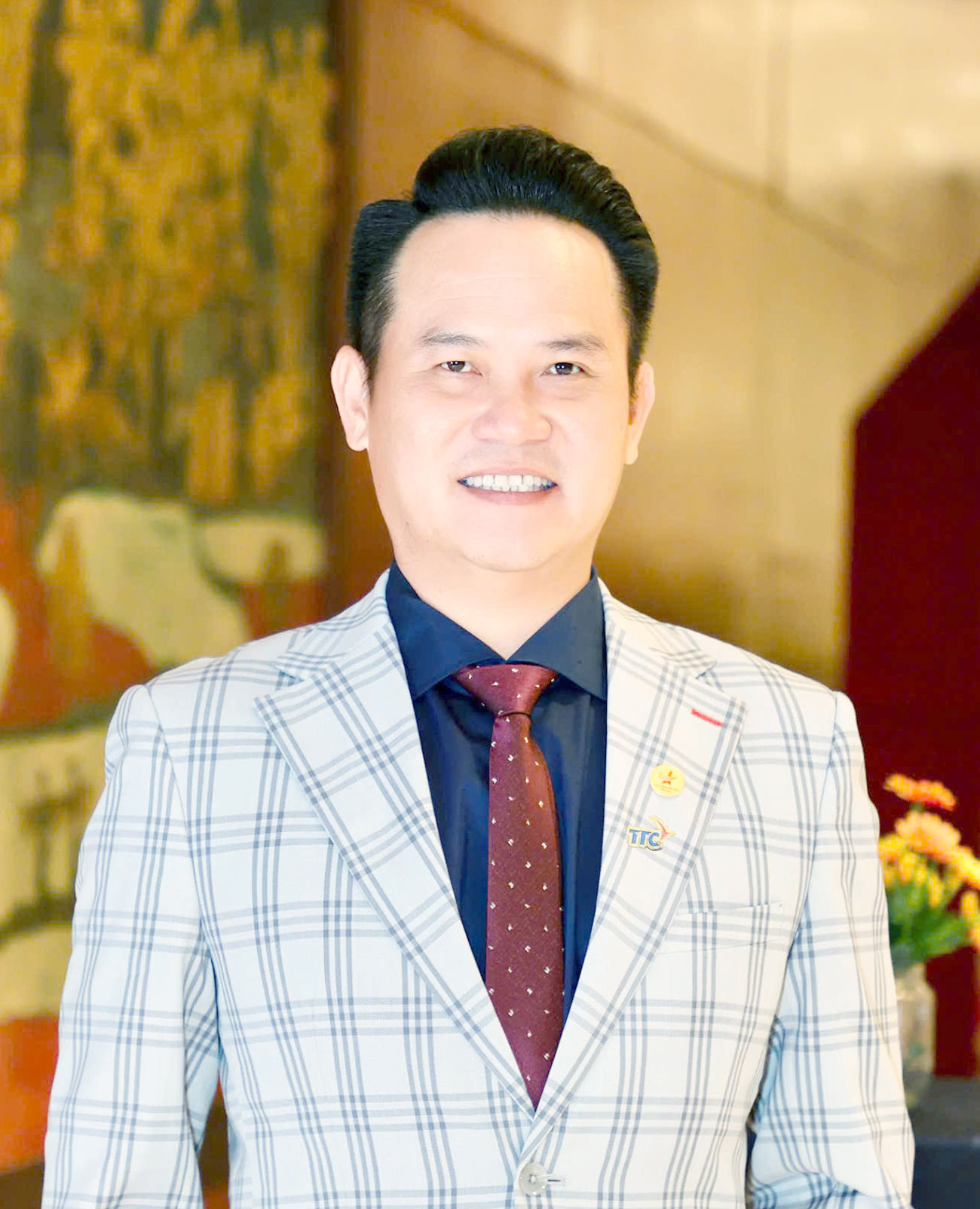 Mr. Dang Hong Anh – Vice Chairman of TTC Group, Chairman of the Vietnam Young Entrepreneurs Association
Four "bottlenecks" requiring priority resolution
- At the First Extraordinary Session opening today, the National Assembly will consider various important bills and resolutions regarding socio-economic development. From the business community's perspective, what are your expectations for this session?
- The session takes place immediately following the Third Plenum of the 14th Party Central Committee—a time when the Central Committee has reached consensus on major policies concerning growth model innovation, marine economic development, land management, science and technology, and digital transformation.
For the business community, this is not merely a routine legislative session but an opportunity for the Party's strategic directions to be swiftly translated into clear, feasible regulations that can be immediately implemented in practice. In particular, bills and resolutions concerning investment, land, banking, customs, telecommunications, electronic transactions, technology transfer, energy, and the handling of stalled projects will directly impact the business environment and corporate investment decisions.
“Through the Vietnam Private Sector Economic Forum (VPSF) 2026, organized by the Vietnam Young Entrepreneurs Association, businesses have not only raised concerns but also proposed mechanisms such as a focal point for project handling, public disclosure of land data, classification of procedures by risk, and a mechanism for monitoring the resolution of recommendations. VPSF also aims to screen policy initiatives and promote commitment to implementation between the government and businesses. These developments show that the requirement to improve the institutional framework that the National Assembly is considering stems directly from the practical realities of production and business.”
Chairman of the Vietnam Young Entrepreneurs Association, Dang Hong Anh
Central Resolution No. 3 identifies a growth model based on productivity, science and technology, data, innovation, and high-quality human resources; and sets a target of double-digit growth for the period 2026-2030. This goal requires a transparent, synchronized legal system that unlocks resources. From a business perspective, we expect three main changes: addressing legal conflicts comprehensively instead of amending individual laws; reducing time, costs, and actual risks instead of just streamlining procedures; and ensuring that new regulations take effect immediately and are applied consistently.
- In your opinion, what institutional bottlenecks are businesses most hoping the National Assembly will address soon?
- I believe there are four major bottlenecks that need to be addressed.
- Firstly, land, real estate, and housing. This is the initial stage but also the longest phase in the implementation of many projects. What businesses need is a transparent mechanism for accessing land, unified planning, clear regulations on compensation, resettlement, land use conversion, and handling of transitional projects. Therefore, amendments to the Land Law, the Real Estate Business Law, and the Housing Law need to be considered as a unified whole, avoiding overlaps that create new bottlenecks.
- Secondly, investment, business conditions, customs, and administrative procedures. This is an opportunity to substantially reduce licenses and specialized inspections; manage based on risk, avoid duplicate inspections, and shift strongly towards post-inspection.
- Thirdly, capital and financial services. The refinement of regulations on banking, credit, and anti-money laundering should aim to expand access to capital, especially for small and medium-sized enterprises. Credit granting should be based more on project performance, cash flow, and data rather than relying primarily on collateral, while continuing to simplify unnecessary procedures.
- Fourthly, digital infrastructure, electronic transactions, and technology transfer are fundamental to businesses innovating their business models and enhancing their competitiveness. The legal system needs to create a space for the development of the digital economy, artificial intelligence (AI), cloud computing, and new business models, while ensuring data security, national security, and promoting the testing, application, and transfer of technology.
Transparency in implementation to strengthen investment confidence
- The National Assembly will also consider several resolutions to remove development bottlenecks and issue specific mechanisms for certain key sectors and projects. In your opinion, how will these decisions impact the confidence and investment decisions of businesses?
- In my opinion, these resolutions send a very clear message: The State proactively addresses development bottlenecks, preventing resources such as land, capital, energy, and projects from being "frozen" due to legal obstacles.
- Notably, a specific mechanism is in place to address obstacles in the state-owned, private, science and technology, and innovation sectors. The principle is to address the nature of violations correctly, avoiding the legitimization of wrongdoings and the criminalization of economic relations, while simultaneously resolving cases of good faith in a transparent and supervised manner.
- For renewable energy sources such as wind and solar power, this mechanism will help resolve issues related to planning, electricity pricing, and grid connection, thereby unlocking resources and strengthening investor confidence.
- In addition, decisions regarding APEC 2027, Hanoi's Ring Road 5, the Lao Cai - Hanoi - Hai Phong railway, the Ninh Thuan nuclear power plant, and the establishment of new cities will open up new development opportunities.
- Investment confidence will increase when issues are handled transparently and consistently. More importantly, implementation must clearly define responsibilities, tasks, timelines, and expected results, avoiding mere formality. This is also the spirit of the Vietnam Private Sector Economic Forum (VPSF) 2026: dialogue must lead to assigned responsibilities, deadlines for responses, and mechanisms for monitoring results.
Shifting from “requesting removal of obstacles” to “co-creating policies”
- To effectively take advantage of opportunities from new policies, what do you think the young business community needs to prepare?
- I think young entrepreneurs need to prepare in three aspects: complying with the law, innovating growth models and participating in policy creation.
- First of all, businesses need to review all operations according to the amending laws. Real estate businesses must standardize land, legal and financial records; Import-export businesses upgrade origin traceability and customs; Technology businesses prepare for data, cybersecurity, electronic transactions and intellectual property.
- Second, we must innovate the growth model. According to Central Resolution 3, science, technology, data and high-quality human resources are the main driving forces. Businesses need to invest in management, research and development (R&D), automation, AI, productivity and green standards; Digital transformation and green transformation must be substantive in the way they create value.
- Third, businesses need to participate in new development spaces such as infrastructure, energy, urban areas, marine economy and APEC 2027. This is an opportunity to form a new supply chain, requiring businesses to increase capacity and better connect.
- Finally, young entrepreneurs need to move from "asking for solutions" to "co-creating policies", making well-founded and feasible recommendations.
- The Vietnam Young Entrepreneurs Association will continue to use VPSF to gather, standardize and convey practical recommendations to the National Assembly, the Government and ministries and branches to contribute to improving policies.
- When the Party's major policies are promptly institutionalized by the National Assembly, the Government organizes drastic implementation and businesses proactively innovate, we will create the necessary synergies to unlock resources, improve productivity and realize the double-digit growth goal in the new development period.
- Thank you!
According to the People's Representative Newspaper.