A delegation from the Vietnamese Business Association in Australia (VBAA), led by Chairman Tran Ba Phuc, recently visited and held a working session with TTC Group. The two sides discussed future cooperation strategies, market connectivity, and ways to leverage the resources of entrepreneurs and the overseas Vietnamese community.
During the meeting, businesswoman Huynh Bich Ngoc Permanent Vice Chairwoman and CEO of TTC Group outlined the group's key business sectors following more than four decades of development. TTC Group currently operates in fields such as agriculture, energy, real estate, tourism, and education.
Enhancing the value of Vietnamese agricultural products
Agriculture stands out as a core sector, spearheaded by the subsidiary TTC AgriS. According to Ms. Huynh Bich Ngoc, TTC AgriS manages a cross-border raw material zone spanning over 71,000 hectares across Vietnam, Laos, Cambodia, and Australia; it produces nearly 5,000 tons of sugar daily and holds approximately 46% of the sugar market share in Vietnam.
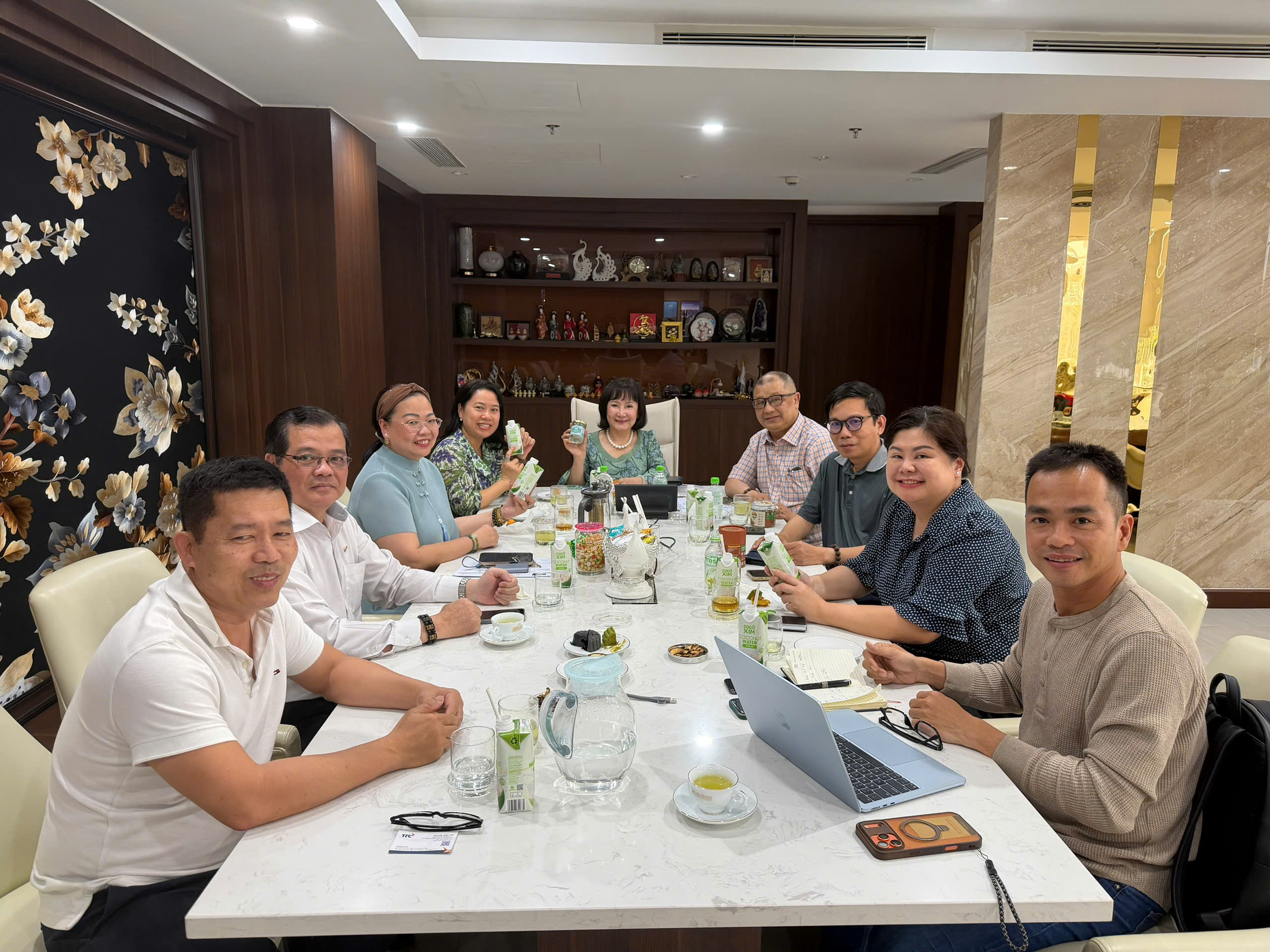 Scene of the unit's meeting and working session.
TTC AgriS currently offers over 88 sugar product lines including organic sugar meeting EU and USDA standards alongside various sugar-derived products, sugarcane-based beverages, and coconut products. The company has successfully introduced its products to more than 50 international markets.
"We aim to develop agriculture through a value-chain approach, focusing not only on core products but also on the efficient utilization of by-products. TTC applies technology and pursues a circular economy model. Our goal is to create products that are competitive in the international market while simultaneously enhancing the value of Vietnamese agricultural produce," shared Ms. Huynh Bich Ngoc.
According to Ms. Huynh Bich Ngoc, TTC AgriS targets a revenue of VND 60 trillion by 2030 and seeks to further expand its presence in the global food and beverage (F&B) market. The company has identified enhancing competitiveness, market expansion, and brand development all rooted in sustainable values as key strategic priorities for the future.
Beyond its production and business operations, TTC Group actively implements social welfare programs through the Thanh Ngoc Charity Fund. Over the past four decades, the company has carried out numerous community support initiatives, including the "TTC - Stepping Stones to Success" scholarship program in Ben Tre; the "Joy from Compassion" voluntary blood donation drive; the "White Shirts of Love – Going to School" program; and the provision of health insurance, livelihood support, and housing (including "gratitude houses" and charity homes) for the needy. Additionally, the group awards scholarships to underprivileged yet studious students and funds the construction of rural bridges.
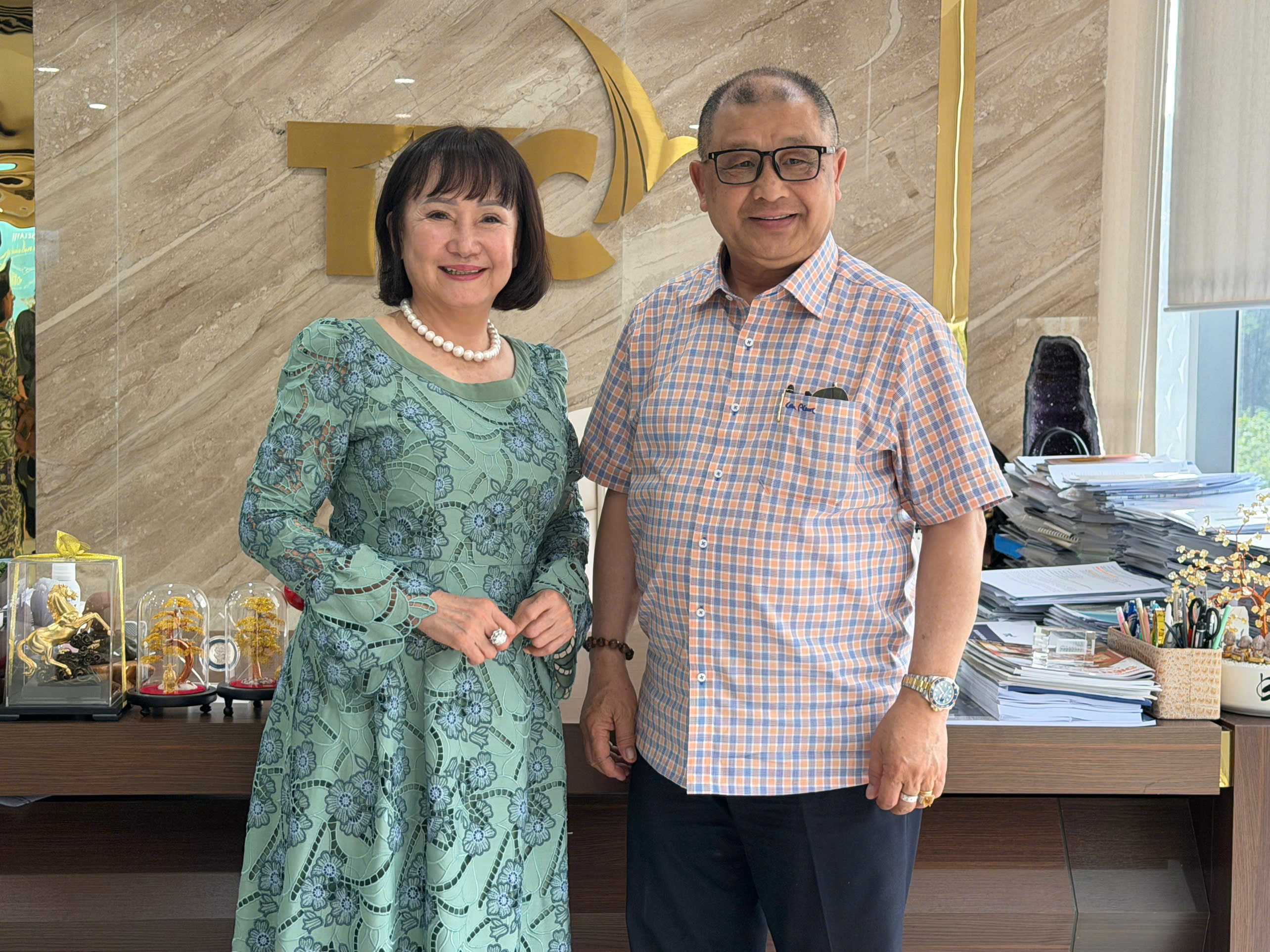 Mr. Tran Ba Phuc and Ms. Huynh Bich Ngoc pose for a commemorative photo.
For years, TTC has also implemented support programs for residents in areas affected by drought and saltwater intrusion, helping to alleviate hardships faced by rural communities.
Speaking with the VBAA delegation, Ms. Huynh Bich Ngoc noted TTC Group's interest in the Australian market and expressed a desire to expand cooperation with Vietnamese entrepreneurs in Australia.
"Through Mr. Tran Ba Phuc, I would like to extend my best wishes to the officials of the Vietnam Trade Office in Australia particularly the Vietnamese Ambassador and to all those who have supported Vietnamese enterprises in accessing the market. Australia holds great potential. I believe that TTC Group and the VBAA will develop further concrete cooperative programs in the near future," Ms. Huynh Bich Ngoc said.
Mr. Tran Ba Phuc thanked TTC Group's leadership for meeting with the delegation, noting that connecting domestic enterprises with the Vietnamese business community in Australia plays a practical role in market expansion, trade promotion, and the strengthening of bilateral economic cooperation.
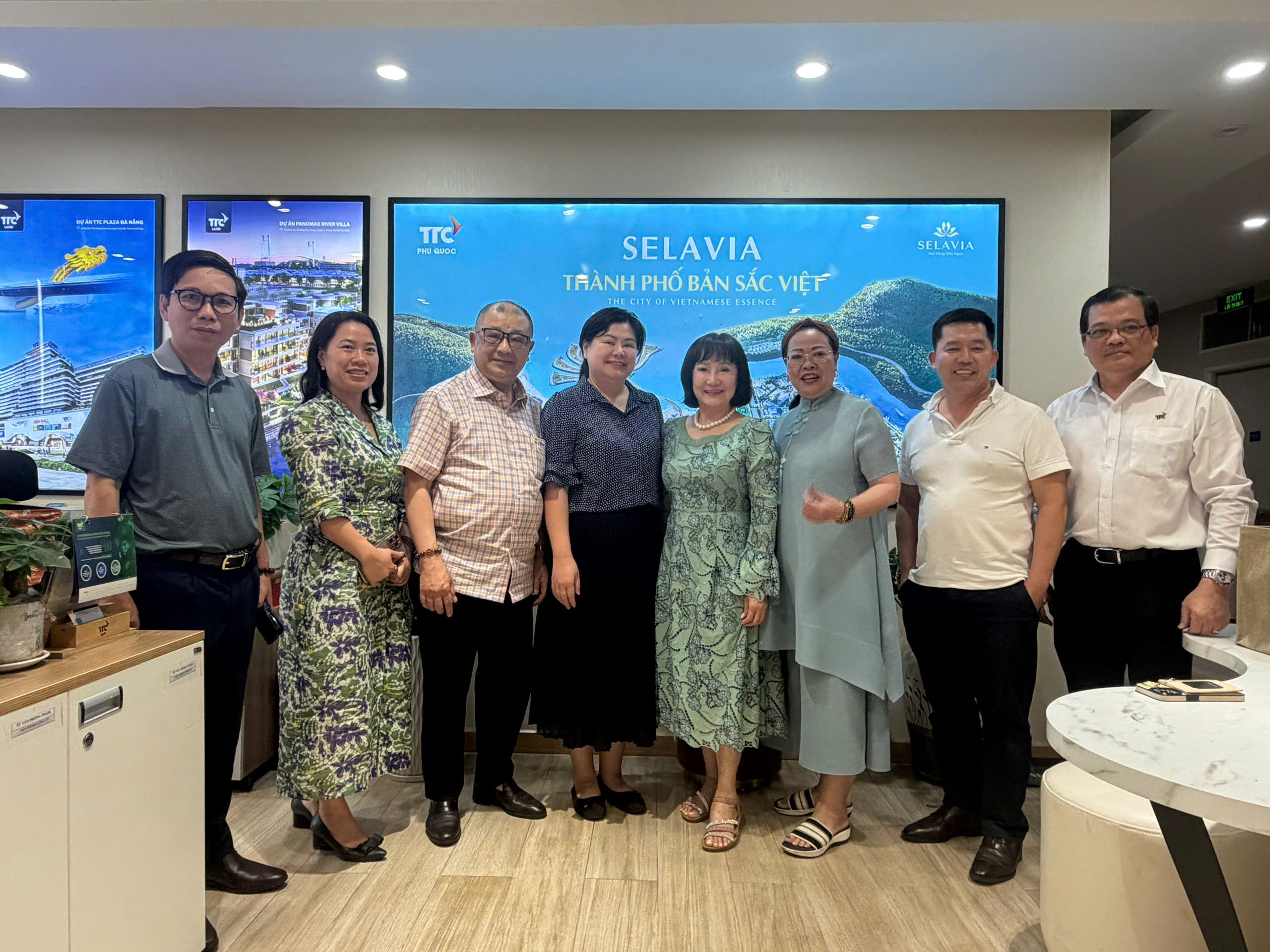 Members of the two units take a commemorative photo.
According to Mr. Tran Ba Phuc, the overseas Vietnamese community is not only an integral part of the Vietnamese nation but also a vital resource in the process of international integration. With their capital, knowledge, management expertise, technology, and local networks, overseas Vietnamese entrepreneurs can serve as a bridge connecting domestic enterprises with international markets.
“Beyond simply supporting businesses, we are committed to doing our utmost for initiatives that serve the national interest—particularly through bilateral economic and trade activities—and to helping enterprises leverage trade agreements, comprehensive partnerships, and market expansion opportunities. Above all, we aim to foster a shared sense of national pride and dignity,” Mr. Tran Ba Phuc stated.
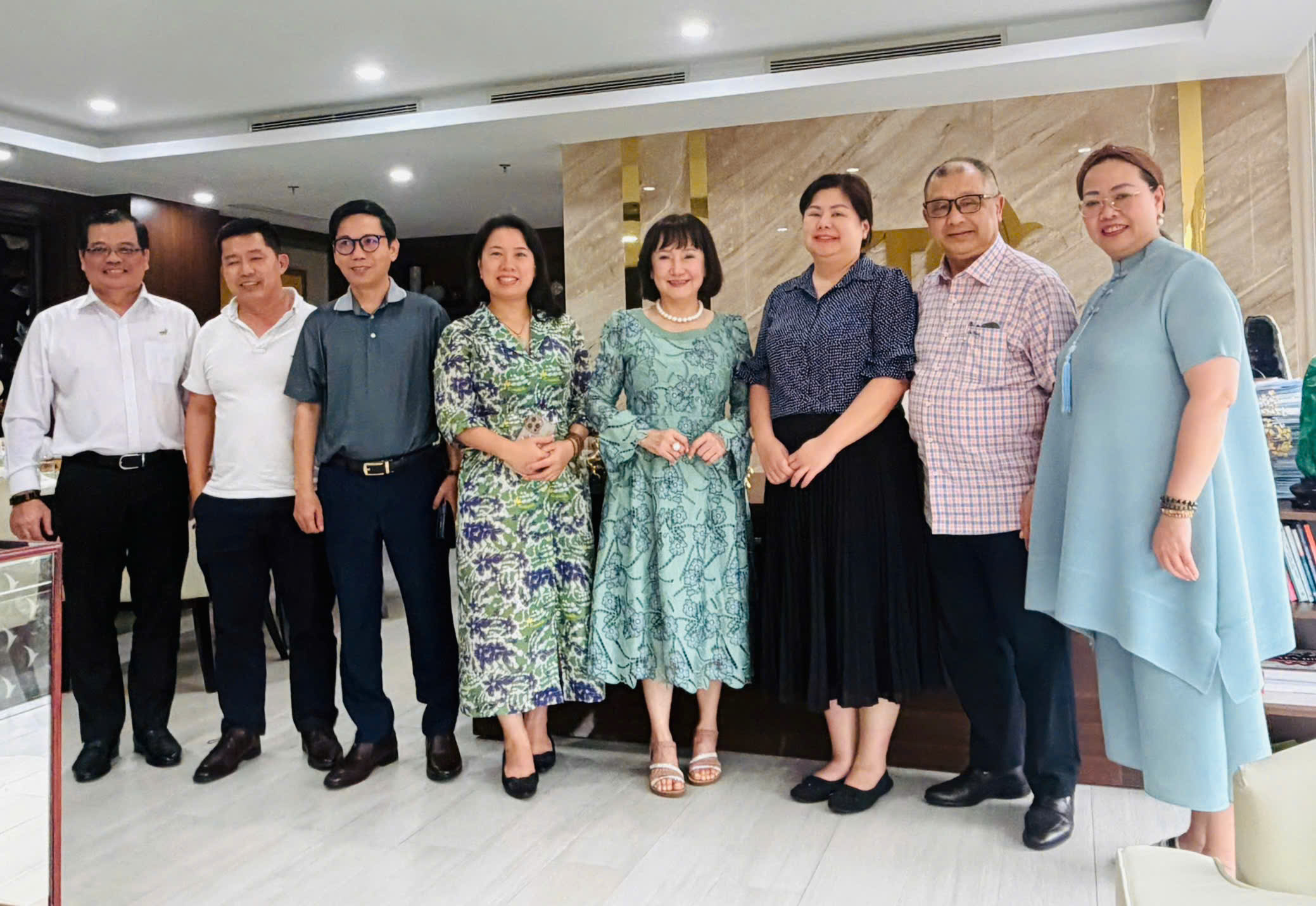 Members of the two units take a commemorative photo.
According to Mr. Tran Ba Phuc, efforts to connect overseas Vietnamese entrepreneurs with domestic businesses must be substantive and long-term, going beyond mere networking or trade promotion. Such connections would enable the parties to establish new cooperative networks across investment, trade, tourism, science and technology, and other sectors of mutual strength.
Expanding investment horizons
Ms. Huynh Bich Ngoc also introduced the Selavia Phu Quoc project. She noted that Selavia is not merely a resort real estate project but is envisioned as an urban area built upon the foundation of Vietnamese cultural identity.
“Spanning nearly 300 hectares, Selavia is located at Vinh Dam in Southern Phu Quoc one of the few remaining areas that preserves a rare, multi-layered natural ecosystem. With over 2 kilometers of coastline and diverse terrain, the project possesses significant advantages for developing a large-scale, systematically planned, and sustainable resort urban area,” Ms. Huynh Bich Ngoc stated.
She explained that Selavia aims to organize living spaces and experiences around cultural depth. Vietnamese identity is not merely reflected in architecture or landscaping but serves as a central theme woven throughout the urban area's master planning, architectural design, and operational ecosystem.
Mr. Tran Ba Phuc noted that while 56 foreign banks currently operate in Australia, the Vietnamese community, the number of international students, and the volume of Vietnamese businesses investing in the market are all steadily increasing. He believes that establishing a Vietnamese bank in Australia would facilitate the effective tapping of the annual remittance flow valued at approximately US$1–1.5 billion from Australia to Vietnam. Furthermore, it would support payment processing, trade finance, and investment activities, while providing financial services to businesses and individuals in both countries.
 A view from Selavia
According to Mr. Tran Ba Phuc, the presence of a Vietnamese bank in Australia could help reduce cross-border transaction costs, enhance capital flow connectivity, support Vietnamese enterprises in expanding their overseas investments, and attract capital from Australia into Vietnam. Given these factors and its own capabilities, Mr. Phuc stated that if TTC Group pursues any investment avenues in Australia, the VBAA stands ready to partner with them.
“This would also be a move of strategic significance, helping to elevate the standing of Vietnam’s banking sector, supporting Vietnamese enterprises in reaching international markets, and effectively serving the country's external economic development goals...” Mr. Phuc emphasized.
Regarding the real estate sector, Mr. Phuc noted that TTC Group’s strengths specifically in green real estate development aimed at creating living ecosystems where humanity and nature coexist in harmony across residential, tourism, and commercial segments align well with development trends in the Australian market.
He added that this sector also aligns with the sustainable development goals Australia is actively promoting. The VBAA hopes TTC Group will explore expanding its real estate operations into Australia, initially targeting the state of Victoria and major cities such as Melbourne, Sydney, and Brisbane. These markets hold significant potential for attracting investment capital from Vietnamese enterprises and could unlock further collaboration opportunities between businesses from both nations.
During the meeting, representatives from the VBAA and TTC Group also discussed various business networking, trade promotion, and international cooperation programs planned for the near future. Both parties anticipate that these initial discussions will pave the way for concrete collaborative opportunities, helping to connect the resources of Vietnamese entrepreneurs both at home and abroad.
Source: Vietnam-Australia Business Newspaper