In the spirit of the 2nd International Vietnam Rice Industry Festival (Can Tho 2026) and the Ooc Om Boc Festival – Khmer Boat Racing in Can Tho City, travel agencies are showcasing a variety of eco-tourism sites, cultural attractions, craft villages, and accommodation options, enriching the experience for visitors exploring the "Tay Do" (Can Tho) region.
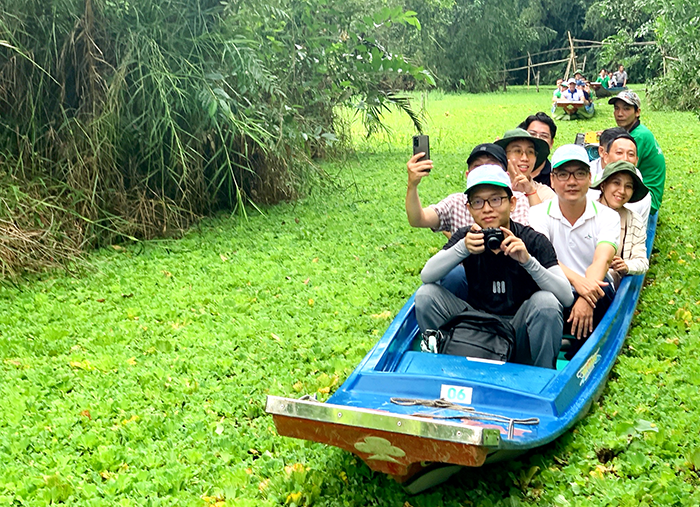 Visitors explore the Mùa Xuân Ecotourism Site.
Exploring Ecotourism and Agritourism
Con Son (in Binh Thuy Ward) is a popular destination frequently included in travel itineraries for those exploring Can Tho during festival seasons. Located just a few kilometers from the venue for the 2nd International Vietnam Rice Industry Festival (scheduled for 2026 in Can Tho), Con Son offers a lush, green ecological environment and a variety of agritourism experiences. Beyond visiting fruit orchards, visitors can explore the freshwater fish ecosystem of the Hau River home to many species characteristic of the Mekong region learn about the symbiotic relationship between water buffaloes and egrets, or enjoy unique activities such as watching "flying" snakehead fish, experiencing a "fish massage," or even a "duck massage."
Approximately 16 kilometers from the city center, Can Tho Eco Resort (in Nhon Ai Commune) serves as another compelling destination for ecotourism. The resort preserves and showcases the quintessential charm of the Mekong Delta, featuring orchards, rice paddies, lotus ponds, melon patches, and fish ponds. It offers over 20 distinct experiences, most notably the "Eco Farm" program, which allows visitors to step into the role of a local farmer catching chickens and ducks, bailing out canals to catch fish, harvesting vegetables, and preparing rustic, traditional dishes.
Meanwhile, the Mua Xuan (Spring) Ecotourism Area (in Tan Phuoc Hung Commune) situated about 30 kilometers from the center of Can Tho City along National Highway 1 toward Ca Mau is an excellent choice for travelers looking to combine their visit with festival-related activities. Spanning approximately 130 hectares, this site features a cajuput forest ecosystem, diverse vegetation, and a landscape interwoven with rice fields, wetlands, and canals. Notably, this area serves as a habitat for approximately 20,000 birds across more than 50 species, including egrets, cormorants, whistling ducks, purple swamphens, painted storks, and Asian openbills. The diverse natural ecosystem offers visitors an opportunity to experience an environment characteristic of wetlands.
Highlights of the cultural and craft village trail
In any journey to explore the riverine culture of Can Tho, the Cai Rang Floating Market remains an unmissable destination. The bustling river trade, the constant movement of boats, and the unique daily routines of the locals never fail to fascinate visitors especially those from abroad. From learning about the *cay beo* (a pole used to display goods for sale) and the local trading culture to enjoying pineapple, coffee, or breakfast right on a boat, every experience contributes to the distinct charm of the floating market.
From the floating market, visitors can navigate through the network of canals to discover traditional craft villages. Places such as the *thung* (basket boat) making hamlet in Yen Ha (Cai Rang Ward), *hu tieu* (noodle) production workshops (An Binh Ward), and the vegetable seedling village (Nhon Ai Commune) offer a glimpse into the daily lives and production processes of the local people. These spots add depth and an authentic local flavor to any exploration of Can Tho.
For those attending the Oc Om Boc Festival and the Ngo boat races in Can Tho, destinations rich in Khmer cultural identity are well worth a visit. In Phu Loi Ward a hub for festival activities visitors can explore renowned Khmer pagodas such as Som Rong, Kh’leang, and the Bat Pagoda (Chua Doi), while gaining insight into the architecture, beliefs, and cultural life of the Khmer community. Additionally, the Thuy Tuyet Rattan and Bamboo Craft Cooperative (in Thuan Hoa Commune) serves as a stopover where visitors can experience traditional handicrafts and explore local cuisine.
Riverside Stays and Indigenous Cultural Experiences
When visiting Can Tho during the festival season, the choice of accommodation plays a key role in ensuring a fulfilling experience. Many travelers favor hotels and resorts located in the city center offering convenient access to festival venues that also feature riverside settings. Notable options include Victoria Resort, Con Khuong Resort, TTC Hotel Can Tho, Ninh Kieu Riverside, Van Phat Riverside, and Legacy Mekong, Can Tho, Autograph Collection.
Beyond providing lodging, some of these establishments also facilitate tours focused on river life, traditional craft villages, and indigenous culture. Victoria Resort organizes excursions to craft villages and river cruises along the Hau River, while TTC Hotel Can Tho connects guests with agricultural and community-based tourism tours. Meanwhile, Legacy Mekong, Can Tho, Autograph Collection offers journeys that allow visitors to discover Can Tho through its unique local cuisine and authentic cultural experiences.
Integrating festival activities with a diverse range of attractions, immersive experiences, and accommodation options not only expands choices for travelers but also helps promote Can Tho as a destination rich in river-based culture, ecological beauty, and agricultural heritage.
According to Can Tho Newspaper