In resort real estate, the majority of profits don't typically come during the busiest market periods, but rather from the ability to identify opportunities before the real growth cycle begins.
That's also why, whenever a destination is about to enter a breakthrough phase in infrastructure, tourism, or international events, capital tends to shift early. Savvy investors often anticipate market trends, rather than waiting for things to become too clear; they look for signals indicating a destination is entering a new growth cycle.
Phu Quoc is currently seen as a market that is converging on such conditions, especially in the context of APEC 2027, which is expected to be a major boost for tourism, infrastructure, and the island's international recognition.
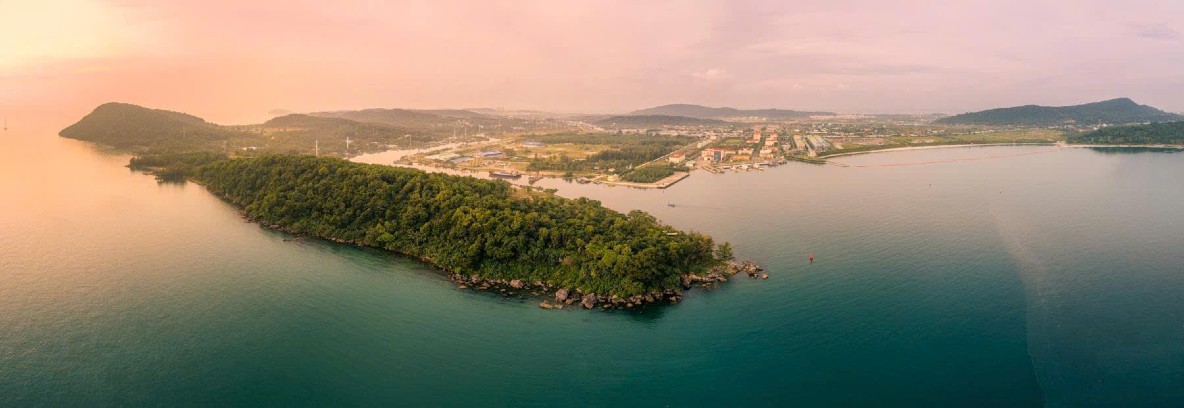 Vinh Dam - located in the southern part of Phu Quoc Island, is entering a phase of accelerated development ahead of APEC 2027.
An international event doesn't just create short-term "waves."
History from many destinations has shown a consistent pattern: the impact of major international events often lasts much longer than the time they take place, especially when the destination has sufficient infrastructure and tourism products to retain visitors afterward.
APEC 2017 in Da Nang is the most recent example. In just the first nine months of 2017 – the period leading up to the event – the city welcomed over 5.15 million visitors, a 22.7% increase compared to the same period the previous year. Foreign direct investment (FDI) inflows surged by 269.5%.
And more importantly, this wasn't a short-lived wave: comparing before and after APEC 2017, land prices in many areas of Da Nang increased by 10% to 30%, a trend that remained stable for many years after the conference concluded. Nearly a decade after that event, Da Nang recorded 17.3 million overnight visitors in 2025, establishing itself as a leading MICE (Meetings, Incentives, Conferences, and Exhibitions) tourism center in Central Vietnam.
The lesson from Da Nang is not about "buying real estate before APEC and selling after APEC." The real lesson is: an international event, when accompanied by systematic infrastructure investment, can upgrade the entire tourism ecosystem of a destination and maintain that attractiveness in the long term. Early investors don't seek short-term gains; they bet on a longer cycle.
That picture is predicted to repeat itself in Phu Quoc, on an even larger scale and with greater potential.
Phu Quoc is entering a phase of accelerated infrastructure development.
To welcome APEC 2027, Phu Quoc – especially the southern part of the island – is undergoing its most intensive infrastructure investment in years. After upgrading, Phu Quoc International Airport will be able to handle 20 million passengers annually. The 19km-long DT.975 arterial road, connecting the airport with the APEC Convention Center and key tourist areas in the South, is expected to be completed before April 30, 2027. The 18km-long LRT urban rail line is expected to begin operation in January 2027, directly connecting the airport with the APEC Convention and Exhibition Center.
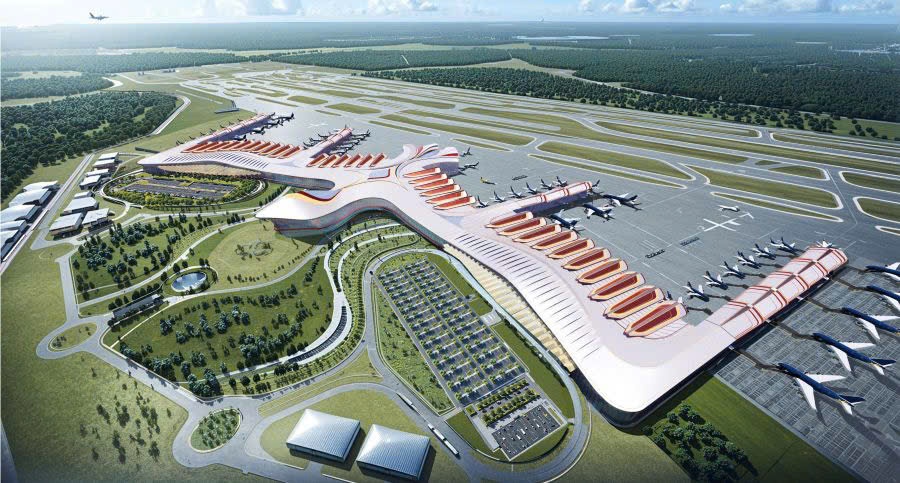 Perspective view of the upgraded Phu Quoc International Airport.
These projects not only serve the conference week, but they also contribute to laying the foundation for infrastructure that will reshape the urban structure of the southern part of the island over the next 10-15 years, driving up real estate values throughout the region.
The APEC visitor influx is also a differentiating factor. When Phu Quoc welcomed international heads of state, businesspeople, and MICE delegates from 21 member economies, the image of the Pearl Island was covered in international media with unprecedented frequency. MICE visitors have high spending power, longer stays, and a superior demand for high-end resort experiences compared to mass tourists. According to many experts, real estate values in Phu Quoc are projected to grow by 20-30% between 2025 and 2027 thanks to the effects of this event, and the southern part of Phu Quoc is currently receiving the strongest wave of investment.
Opportunities are not evenly distributed for all projects.
Not every investor has the foundation to transform the boost from APEC into long-term value. This is a selective phase of the market: it requires not only a prime location, but also the financial capacity to implement projects on schedule, the experience to build a truly operational ecosystem, and the vision to tailor products to high-end international tourists.
In this context, TTC Phu Quoc (a member of TTC Group) leverages the advantages of the multi-industry ecosystem of the Group, with over 46 years of formation and development in fields such as agriculture, energy, tourism, education, and real estate... gradually building Selavia with the aim of becoming a new highlight of resort real estate in the South of Phu Quoc Island.
Notably, TTC Phu Quoc is not a developer focused on short-term trends or simply "riding the wave" of APEC, but rather pursues long-term development, partnering with investors throughout the entire lifecycle of the project.
Selavia - An Opportunity at the Right Moment
According to the master plan, Selavia is considered one of the projects that meets all the conditions to directly benefit from the new growth cycle of Phu Quoc Island.
Located on Vinh Dam, the project boasts over 2km of private beach and spans nearly 290 hectares, a rare advantage given the increasing scarcity of beautiful coastal land in Phu Quoc. Notably, the project also spans 2.5km along Nguyen Van Cu Street, a vital transportation artery connecting the north and south of the island, and is located in an area receiving significant infrastructure investment for APEC 2027.
Furthermore, the value of Selavia lies not only in its location but also in its development as a "City of Vietnamese Identity," aiming to create a resort destination rich in cultural experiences and local identity. This direction aligns with the new tourism trend, where high-end international tourists increasingly prioritize in-depth experiences over mass-market resort models.
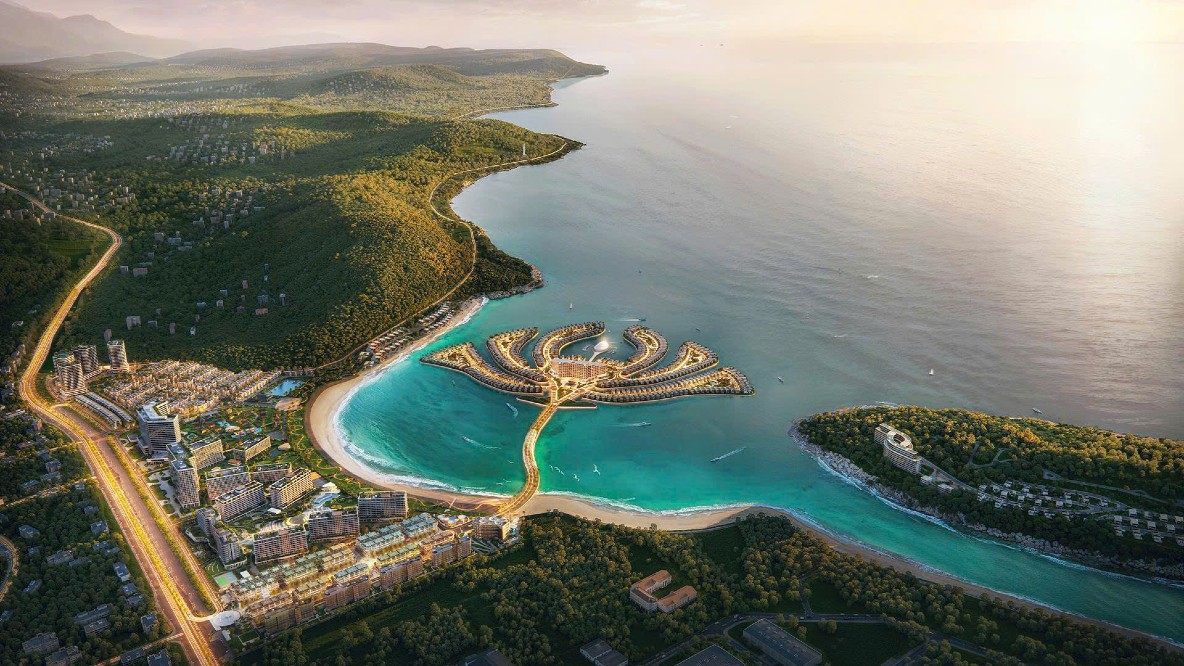 Selavia is a large-scale project spanning nearly 290 hectares, located on Vinh Dam in South Phu Quoc.
Being ahead of the cycle is always an advantage for long-term investors.
APEC 2027 could become a crucial catalyst for Phu Quoc in a new growth cycle for resort real estate. However, opportunities will not be equally available to all projects.
The advantage will belong to projects with strategic locations in areas with developing infrastructure, clear ecosystem planning, and developers with the capacity to complete projects on schedule and operate long-term after the event's effects subside.
With the foundation of the TTC Group, the long-term development orientation of the developer TTC Phu Quoc on Phu Quoc Island, and the comprehensive preparations being implemented, Selavia is positioning itself at the peak of this new growth cycle – not waiting for market confirmation, but proactively creating value before it is recognized.
According to Investment Newspaper