From improving the investment and business environment to addressing bottlenecks related to land, capital, infrastructure, and administrative procedures, Dong Thap is taking concrete steps to implement the spirit of the Politburo’s Resolution No. 68-NQ/TW on the development of the private sector.
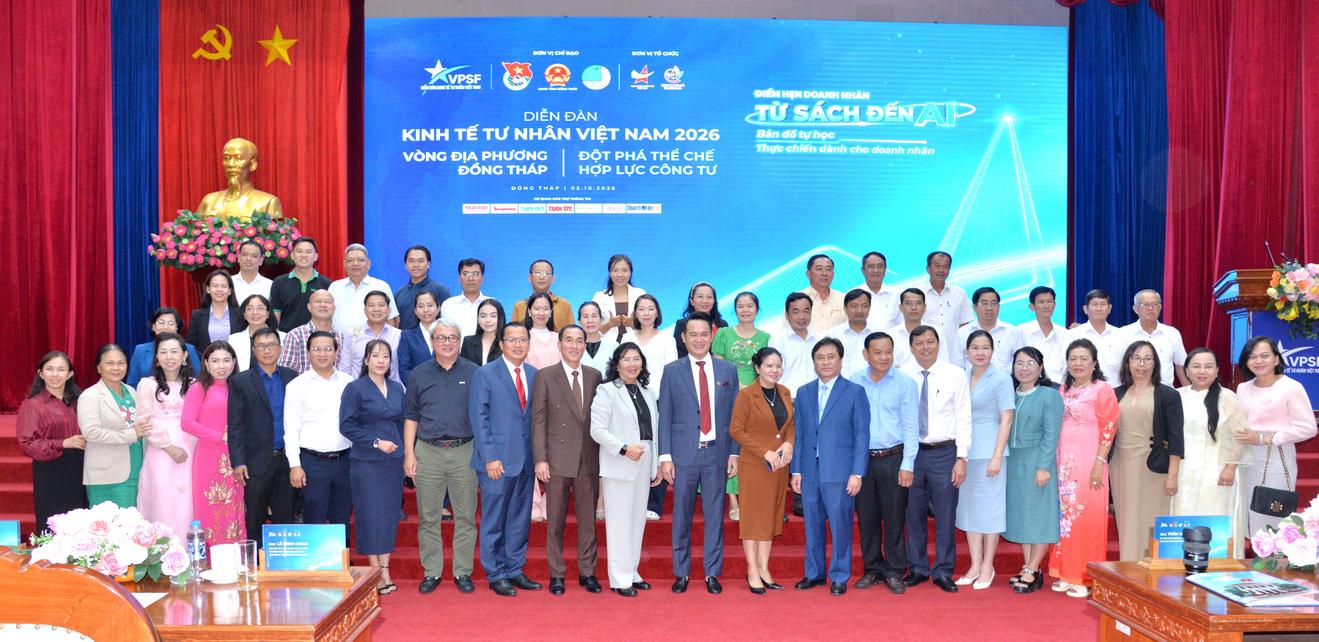 The event “Dong Thap’s Private Sector: Opening New Horizons, Connecting Resources, Creating Value,” held on October 2, sets the expectation for a qualitative shift in the development of the private sector in Dong Thap.
Dong Thap has set a target of reaching 35,000 enterprises by 2030, demonstrating a firm commitment to establishing the private sector as a key driver of the local economy.
According to statistics, in the first 10 months of 2026, 2,577 new enterprises were established in Dong Thap achieving 85.9% of the annual target while 399 enterprises resumed operations.
The significance of the business sector is further reflected in its contributions to the state budget and export activities. In October alone, the province attracted 6 domestic investment projects with a total registered capital of VND 2,088.8 billion. Cumulatively, from the beginning of the year to the time of reporting, the province has attracted 23 new investment projects with a total registered capital of VND 10,778 billion. Additionally, 21 existing projects saw an increase in registered capital by approximately VND 4,144.9 billion, bringing the total newly attracted and additional capital to approximately VND 14,922.9 billion.
These figures underscore the vital role the business sector plays in generating revenue, creating jobs, and facilitating the circulation of goods.
As Dong Thap enters a new phase of development following the reorganization of its administrative units, the market space has expanded, and opportunities for infrastructure and logistics connectivity within the Mekong Delta region have been strengthened. These favorable conditions provide a solid foundation for private enterprises to scale up, access new markets, and integrate more deeply into supply chains. According to Tran Huy Hien, Chairman of the Dong Thap Young Entrepreneurs Association, the provincial merger presents three major opportunities for the private sector: a broader market, improved infrastructure and logistics, and enhanced connectivity within the Mekong Delta region.
To effectively capitalize on these opportunities, Hien suggests that Resolution No. 68-NQ/TW must be well implemented, with a focus on removing barriers related to land, capital, compliance costs, and technological transformation. Once these bottlenecks are addressed, businesses will gain greater confidence to invest, expand their production and operations, and launch new ventures.
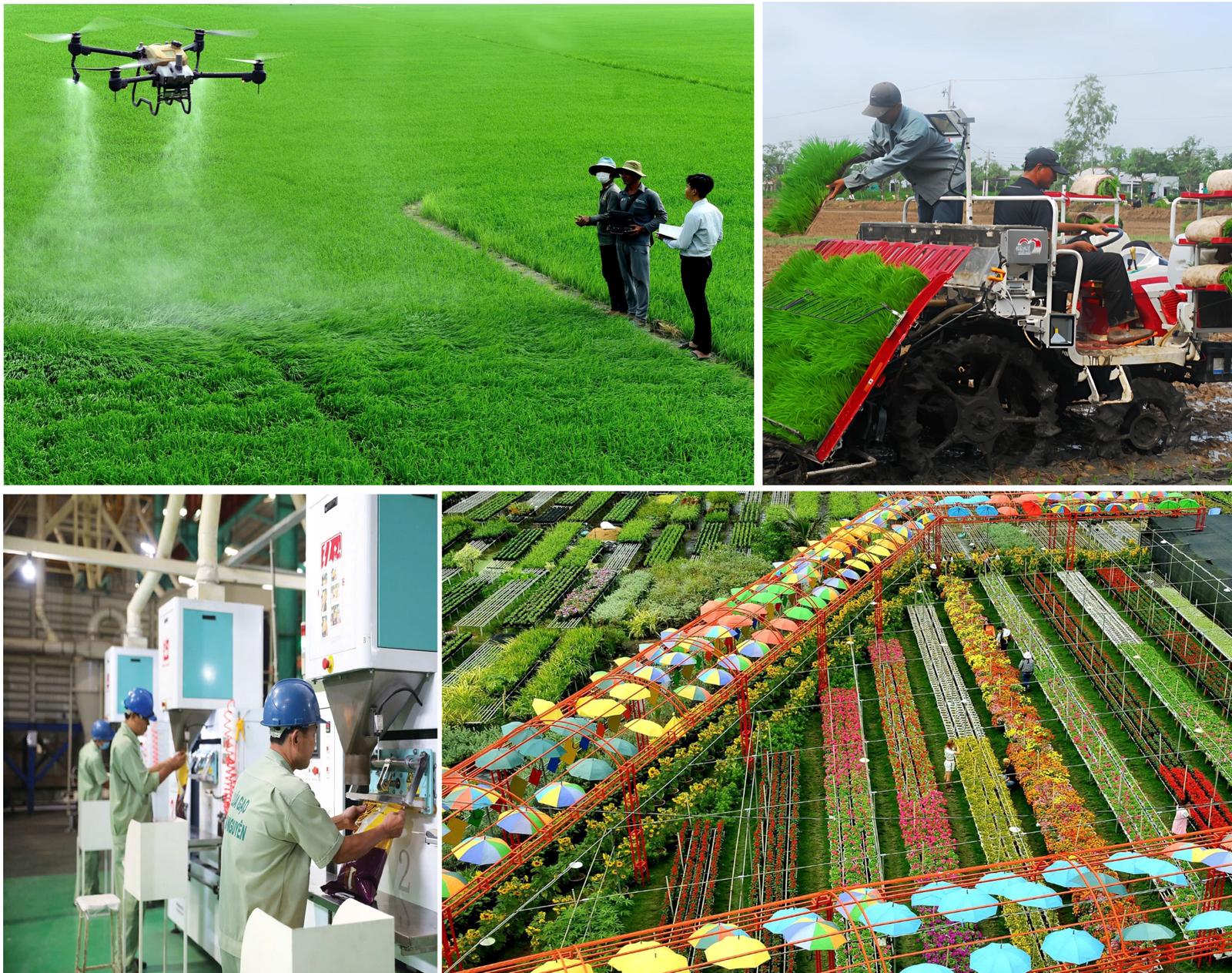 Dong Thap is accelerating digitalization, fostering data interoperability, and making information such as master plans, land reserves, and lists of projects seeking investment publicly available.
A key milestone in the implementation of Resolution No. 68-NQ/TW in Dong Thap province has been the shift in governance approach moving from a mindset of "managing" to one of "serving," with businesses placed at the center of efforts to improve the investment and business environment.
Alongside the reform of administrative procedures, Dong Thap has accelerated digitalization and data integration, while ensuring transparency regarding planning information, land reserves, and lists of projects seeking investment. These practical measures enable businesses to proactively identify opportunities, develop investment plans, and reduce the time and costs associated with accessing information.
On September 25, 2026, the People's Council of Dong Thap province issued Resolution No. 56/2026/NQ-HĐND, which provides land rent exemptions tailored to specific regions and sectors for projects within priority industries or designated investment-incentive zones. This serves as a foundation for the province to further enhance its investment and business climate and foster the growth of enterprises.
In Dong Thap, the commitment to supporting the business community is encapsulated in the guiding principle: "Accompanying – Understanding – Sharing – Creating." This approach was highlighted by the Chairman of the Provincial People's Committee, Nguyen Thanh Nhan, in a congratulatory letter marking the recent 22nd anniversary of Vietnam Entrepreneurs' Day.
Furthermore, during the local dialogue session of the 2026 Vietnam Private Sector Forum (VPSF 2026) held on October 2 under the theme "Dong Thap’s Private Sector: Opening New Horizons, Connecting Resources, and Creating Value" a clear emphasis was placed on the necessity of strengthening enterprise capabilities within this new development landscape. Dang Hong Anh, Chairman of the Vietnam Young Entrepreneurs Association, suggests that following the recent administrative reorganization, Dong Thap now possesses a broader space for development with greater potential. However, the province’s inherent advantages in agriculture, processing, and exports may not be fully realized if local businesses remain constrained by limited capital, technology, management capacity, or human resource quality. Consequently, developing the private sector entails more than just increasing the number of enterprises; it requires enhancing capabilities in production, processing, and distribution, as well as enabling deeper integration into value chains.
A key strategic direction involves strengthening linkages between large corporations and small-to-medium enterprises (SMEs), cooperatives, and farmers, while attracting businesses in processing, logistics, and distribution capable of spearheading supply chains. Furthermore, comprehensive investment in cold storage facilities, irradiation centers, and logistics services will help reduce costs, improve product quality, and expand market access.
Dong Thap has set a target of having 35,000 active enterprises by 2030, with the private sector projected to contribute 55–58% of the Gross Regional Domestic Product (GRDP). This goal reflects high expectations for the role of the private sector within the local economic structure.
Resolution No. 68-NQ/TW mandates that the development of the private sector must encompass not only scale but also quality, efficiency, and sustainability. For Dong Thap, this means transforming its advantages in agriculture, processing, exports, and regional connectivity into the capacity to generate higher value locally.
According to Thanh Tra Newspaper