The 14th National Congress of the Party is not only a momentous political event, but also marks a strategically significant shift in the country's development thinking. In this era of progress, the young Vietnamese business community is proactively participating in a pioneering role, demonstrating their responsibility through concrete actions, sharing the common goal of building a strong and prosperous nation.
Leveraging endogenous resources for national development.
Presenting the report on the documents submitted to the 14th National Congress of the Party, General Secretary To Lam emphasized that the 14th National Congress of the Party is a particularly important political event for the entire Party, the entire people, and the entire army; it marks a milestone opening a new path of national development in a new context, situation, and goal; it is a Congress of strategic self-reliance, self-strength, national pride, of the aspiration to rise, and of unwavering faith in the path chosen by the Party, President Ho Chi Minh, and the Vietnamese people.
In his speech, the General Secretary also stressed the need to strongly awaken the tradition of patriotism, the aspiration for development, the spirit of unity, the will for self-reliance, self-confidence, self-strength, and national pride; and to promote the strength of culture and human resources as an endogenous resource and driving force for development.
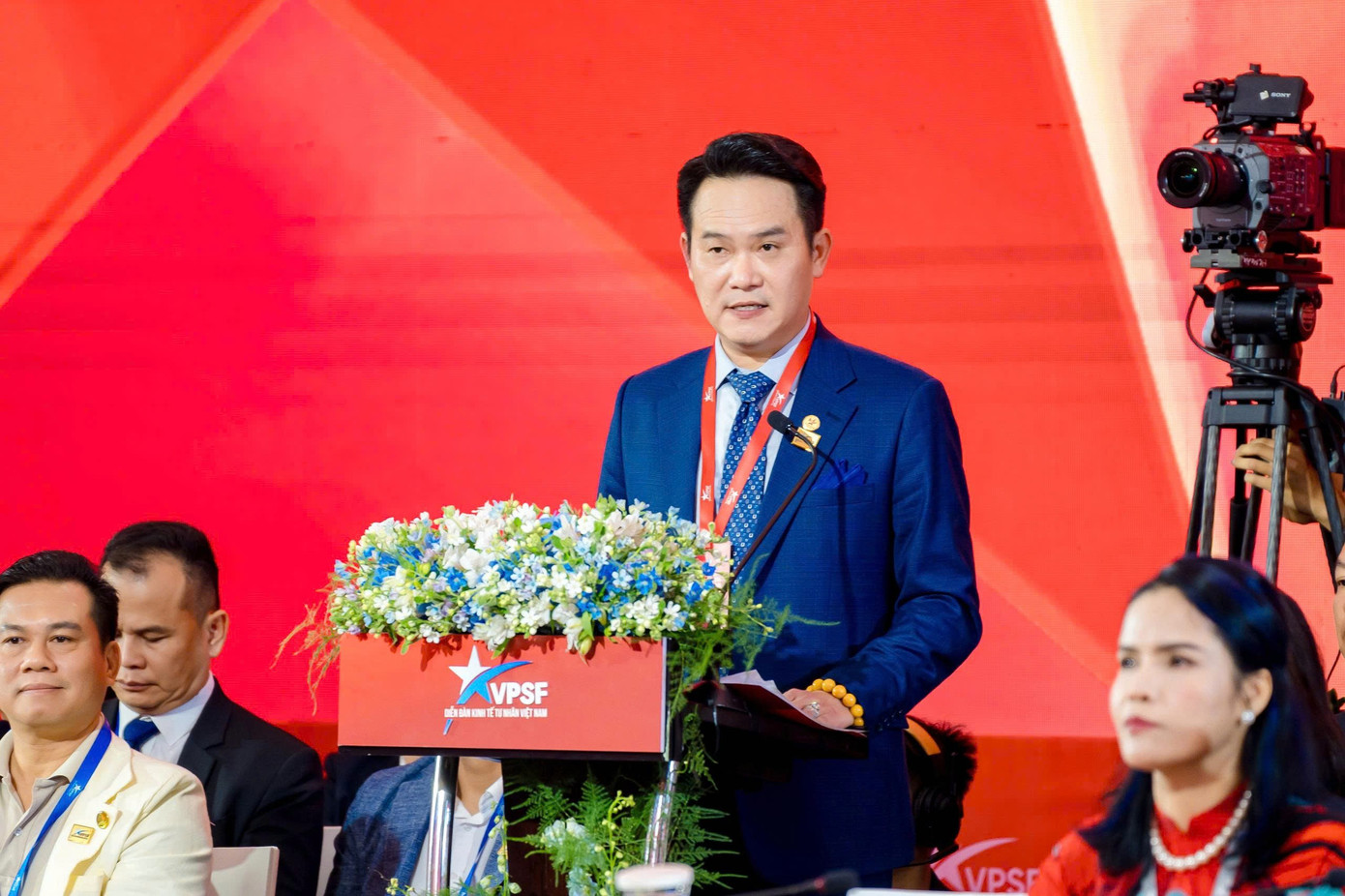 Mr. Dang Hong Anh - President of the Vietnam Young Entrepreneurs Association.
So, how can we leverage the elements of "self-reliance, self-confidence, self-sufficiency, self-strength, and national pride" to realize endogenous resources in the new era? In reality, for many years, the foreign direct investment (FDI) sector played a crucial role in growth, exports, and economic restructuring. However, as the economy enters a higher stage of development, over-reliance on external drivers reveals clear limitations.
For the country's economy to accelerate and develop sustainably, it cannot rely solely on external forces; it needs a sufficiently strong endogenous force. This is precisely the Vietnamese business community, in which private enterprises play the most important role in the national economy, directly transforming the Party's guidelines and policies into material wealth, jobs, and national competitiveness.
The Vietnam Young Entrepreneurs Association currently has approximately 21,000 members, creating jobs for about 5 million workers, achieving annual revenue of over 40 billion USD, and contributing more than 10% to the national GDP. This is clear evidence of the potential of the private business sector, if well organized, properly guided, and given the conditions for genuine development.
Experience from many countries shows that the rise of strong economies is always linked to nurturing domestic corporations with sufficient global competitiveness. Vietnamese businesses want to be genuinely prioritized in development planning, public procurement, and key national projects, instead of suffering disadvantages in their own market due to technical barriers or an approach that still favors external factors.
At the recent 8th Congress of the Vietnam Young Entrepreneurs Association (2025-2030 term), the Central Committee of the Vietnam Young Entrepreneurs Association clearly defined its strategic focus as transforming the spirit of self-reliance and self-strength into concrete action programs.
This involves focusing on promoting intra-regional trade. The Central Committee considers this a fundamental solution to strengthen linkages between Vietnamese businesses, forming domestic and regional supply chains controlled by Vietnamese enterprises.
Through thousands of trade and investment promotion activities implemented in the previous term, along with cooperation agreements with major financial institutions and corporations, the Association aims to build an efficient trading ecosystem, helping member businesses reduce annual operating costs by 8-20% and enhance competitiveness in the domestic market.
The Association also focuses on building leading enterprises capable of leading the industry, leading the value chain, and gradually participating more deeply in regional and global markets.
This orientation is linked to the goal of having at least 50 member enterprises participate in global value chains, thereby increasing the proportion of value added held by Vietnamese businesses and gradually reducing dependence on low-value processing and assembly stages.
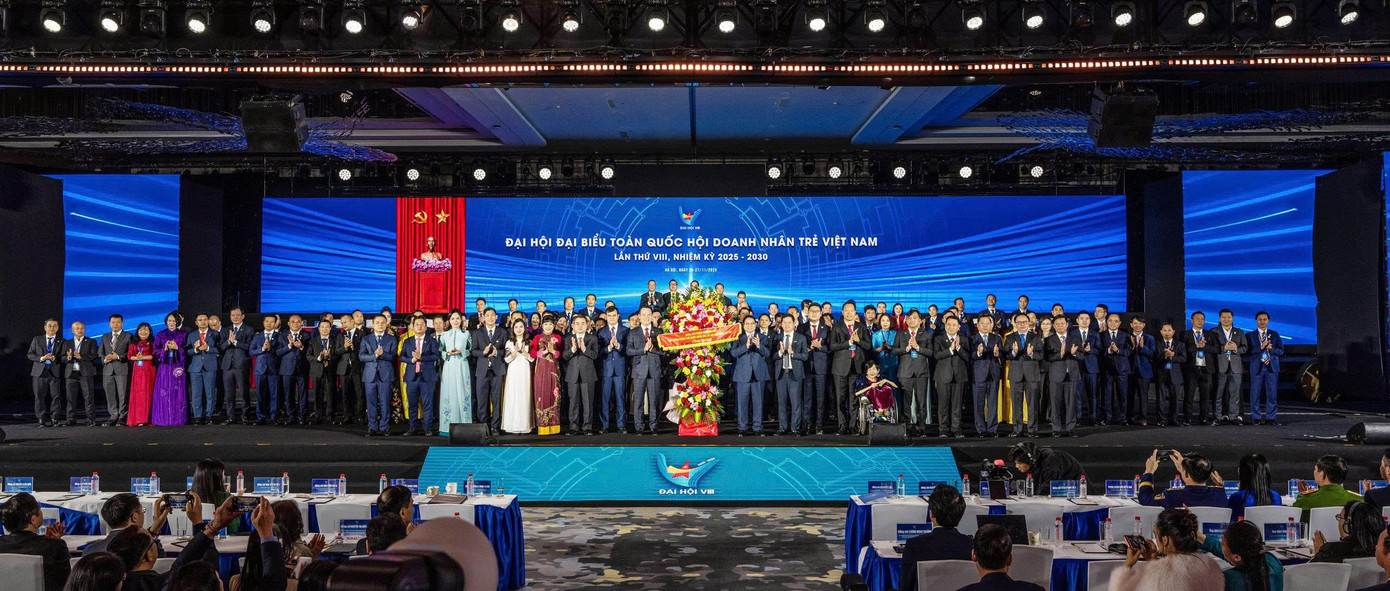 At the recent 8th Congress of the Vietnam Young Entrepreneurs Association (2025-2030 term), the Association clearly defined its strategic focus as transforming the spirit of self-reliance and self-improvement into concrete action programs.
Another crucial strategic pillar is the development of entrepreneurial human resources, considering this a decisive factor in the long-term self-reliance of the economy. Based on this, the Vietnam Young Entrepreneurs Association is pioneering the implementation of the 10,000 CEO Training Program for the period 2025–2030, aiming to enhance management capacity, strategic thinking, digital transformation capabilities, green transformation, and international integration for young entrepreneurs.
The program not only aims to improve individual capabilities but also to create a ripple effect regarding management standards and business culture throughout the private sector.
Through these steps, the Vietnam Young Entrepreneurs Association hopes not only to contribute to realizing the Party's major policies on promoting domestic resources, but also to gradually affirm the role of young entrepreneurs as a proactive and responsible force, accompanying the country in the new era of development, said Dang Hong Anh, President of the Vietnam Young Entrepreneurs Association.
In addition, the Association pays special attention to small and medium-sized enterprises (SMEs), which account for over 90% of businesses nationwide. Programs such as supporting 50,000 business households to transform into enterprises, providing professional consulting services to 10,000 businesses, and spreading the model of "Each young entrepreneur mentoring two new entrepreneurs" are implemented to expand the domestic business base and create a solid successor generation for the private sector in the long term.
Institutional mindset shift
Over the years, business environment reforms have primarily been approached through "removing obstacles," "cutting down procedures," and "simplifying conditions." While this approach has yielded some improvements, its limitations are gradually becoming apparent as development demands increase.
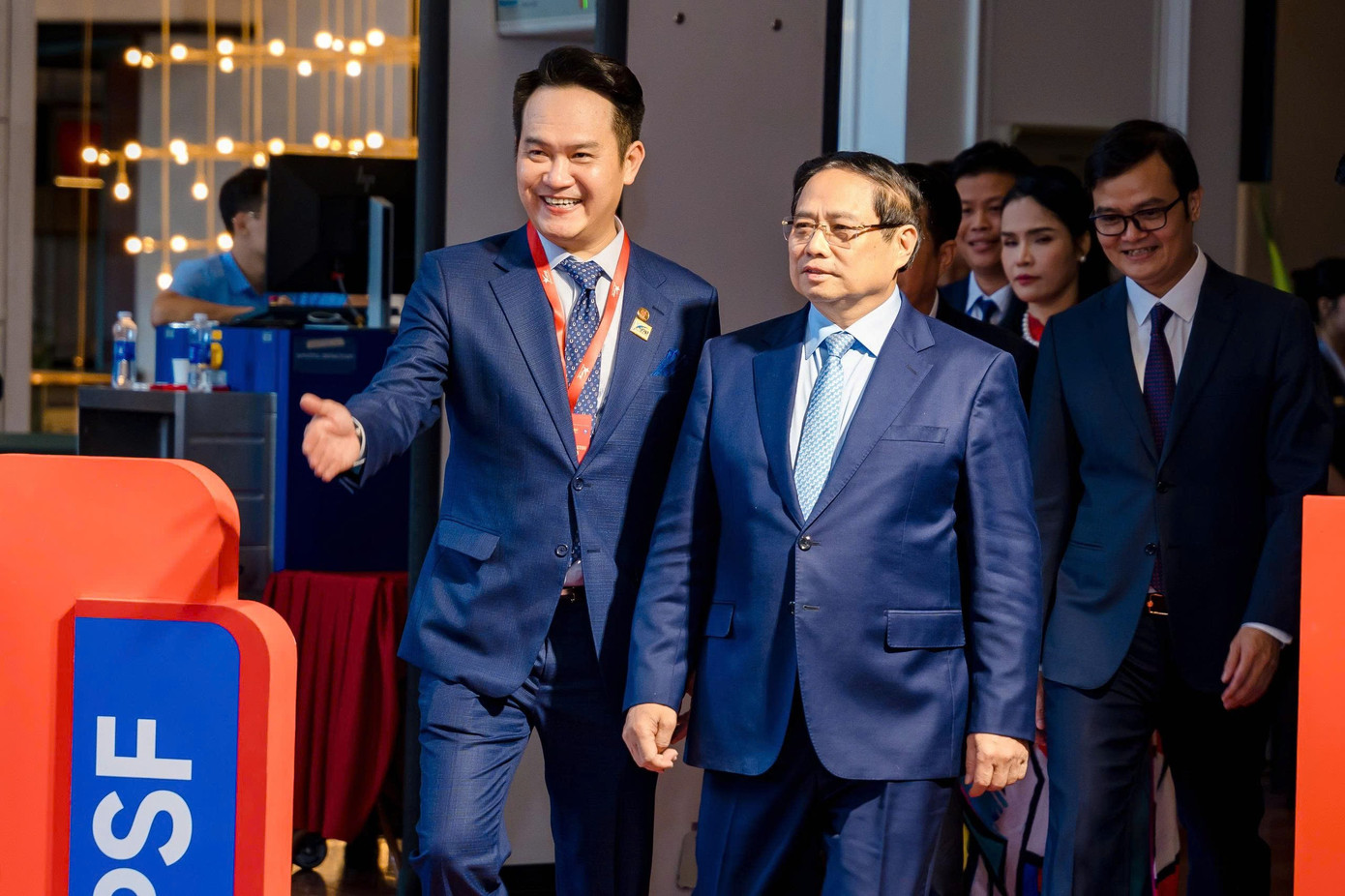
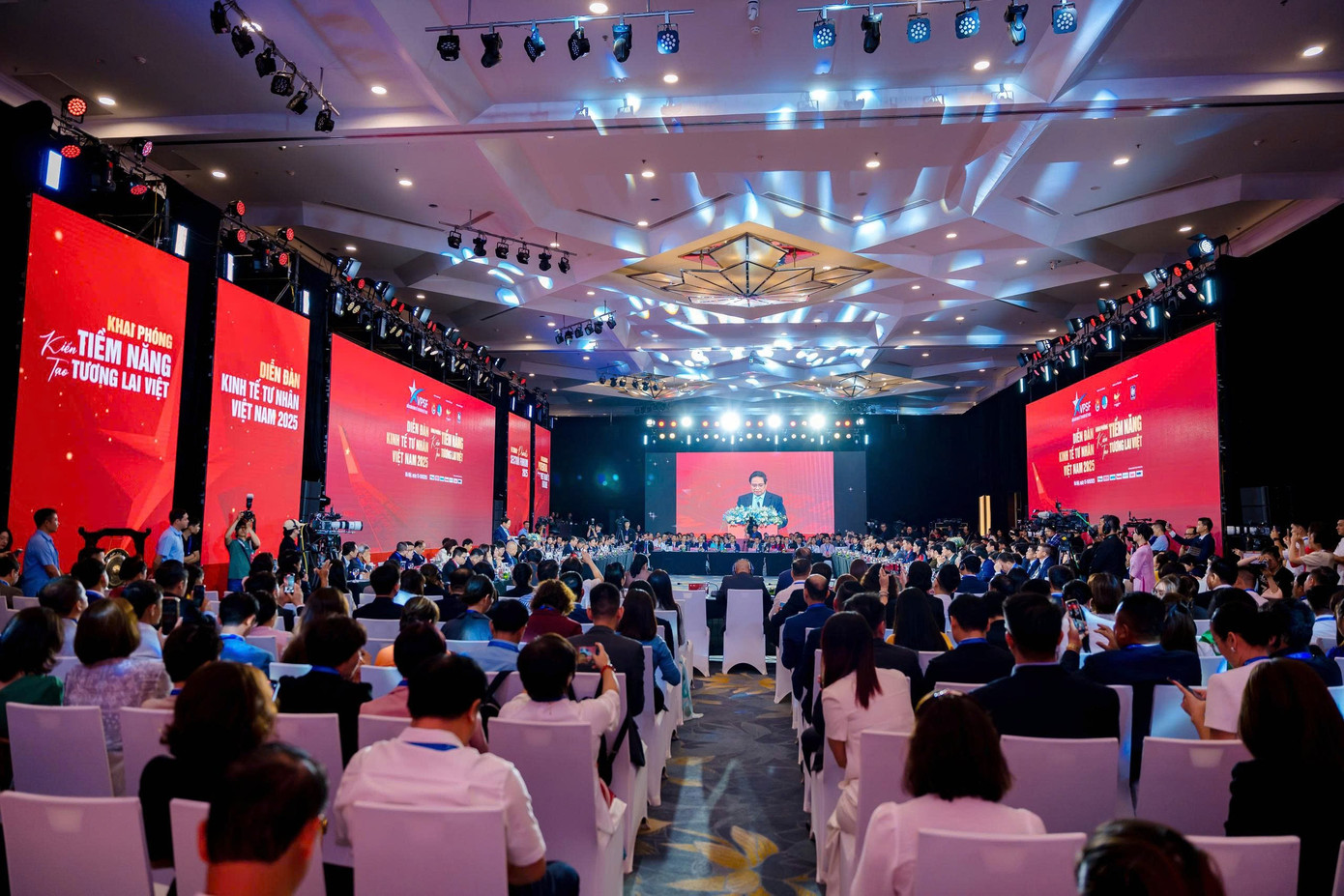
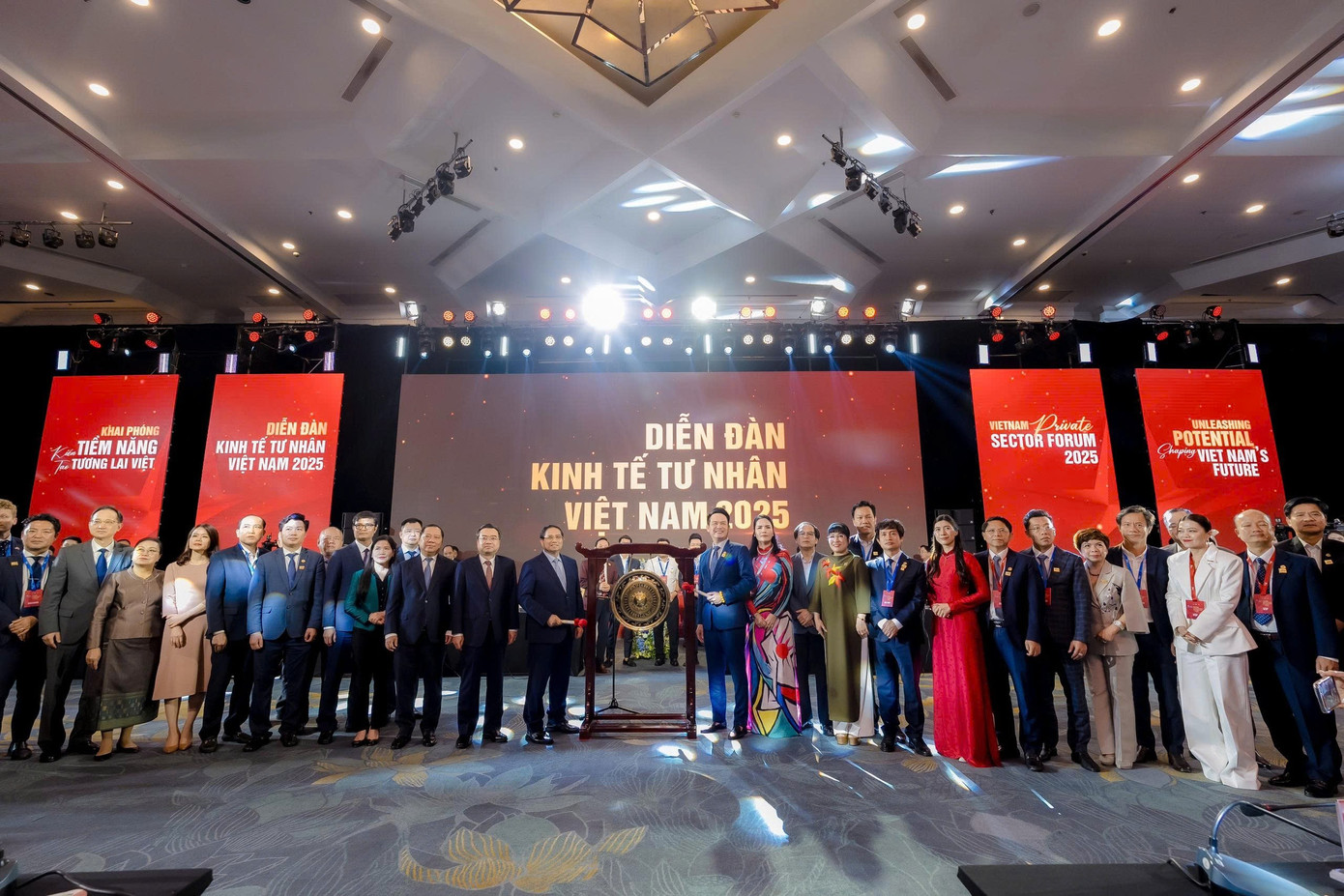
Prime Minister Pham Minh Chinh attended the 2025 Private Economic Forum organized by the Central Committee of the Vietnam Young Entrepreneurs Association.
The report on documents submitted to the 14th National Congress of the Party, presented by General Secretary To Lam at the Congress, emphasized: the need to face the truth squarely and accurately assess the situation; the need to resolutely innovate thinking, improve institutions, and enhance national governance capacity; We must act decisively, resolutely, and effectively...
In particular, the Report clearly states: “Institutions are the ‘bottleneck of bottlenecks’ but also the ‘breakthrough of breakthroughs,’ therefore we must ‘use implementation as the measure,’ resolutely eliminate the ‘request-and-grant’ mechanism, minimize administrative procedures, promote comprehensive digitalization and data interconnection, and use the time and cost of citizens and businesses as the measure of the quality of reform.”
With this determination, the business community expects institutional reform to not only focus on the number of procedures cut or the level of digitization of administrative documents, but also on two core pillars: legal security and a space for innovation. Businesses are not afraid of market difficulties or competition, but their greatest concern is the legal risks arising from a lack of consistency, instability, or retroactive application of policies.
In this context, the Vietnam Young Entrepreneurs Association has determined to continue to have initiatives in implementing the Private Economic Forum in 2020. The 2026 Forum will focus on substantive, continuous, and closely linked policy implementation.
The Forum is not merely a one-way space for exchange and feedback on recommendations, but is designed as an open policy dialogue mechanism with regular participation from management agencies, experts, and the business community. This will form a multi-directional, responsible feedback channel and ensure the thorough monitoring of the acceptance and handling of recommendations.
It is expected that in 2026, the Forum will be organized in three interconnected rounds, starting with local-level dialogues, followed by regional-level strategic roundtables, and concluding with a high-level dialogue session. This aims to ensure that policy recommendations are formulated from practical experience, filtered by sector and field, and followed up throughout the implementation process.
The Forum's content will not be broad but will focus on the strategic development pillars of the 2026-2030 period, such as: large-scale infrastructure, technological self-reliance, energy - green growth, and public-private partnerships. directly involved with key national projects and programs.
Through this approach, the Vietnam Young Entrepreneurs Association (VPSF) hopes that VPSF 2026 will become a regular and responsible policy dialogue space, contributing to building a safe and stable institutional environment and expanding the creative space for businesses, in line with the requirement of using implementation as a measure of reform in the era of national development.
Commitment to partnership through concrete actions.
In this new era of development, as the General Secretary calls on every social force to contribute to realizing the goal of a strong, prosperous, and happy Vietnam, young entrepreneurs cannot be measured solely by profit. Facing the Party's ambitious development goals for 2030 and vision for 2045, the young Vietnamese entrepreneurs clearly define their responsibility to contribute not only in terms of growth scale, but also in the quality and sustainability of that growth.
Young entrepreneurs aspire to become pioneering forces in creating new industries, participating deeply in global value chains, promoting digital transformation, green transformation, and innovation, thereby directly contributing to the goal of high and stable GDP growth.
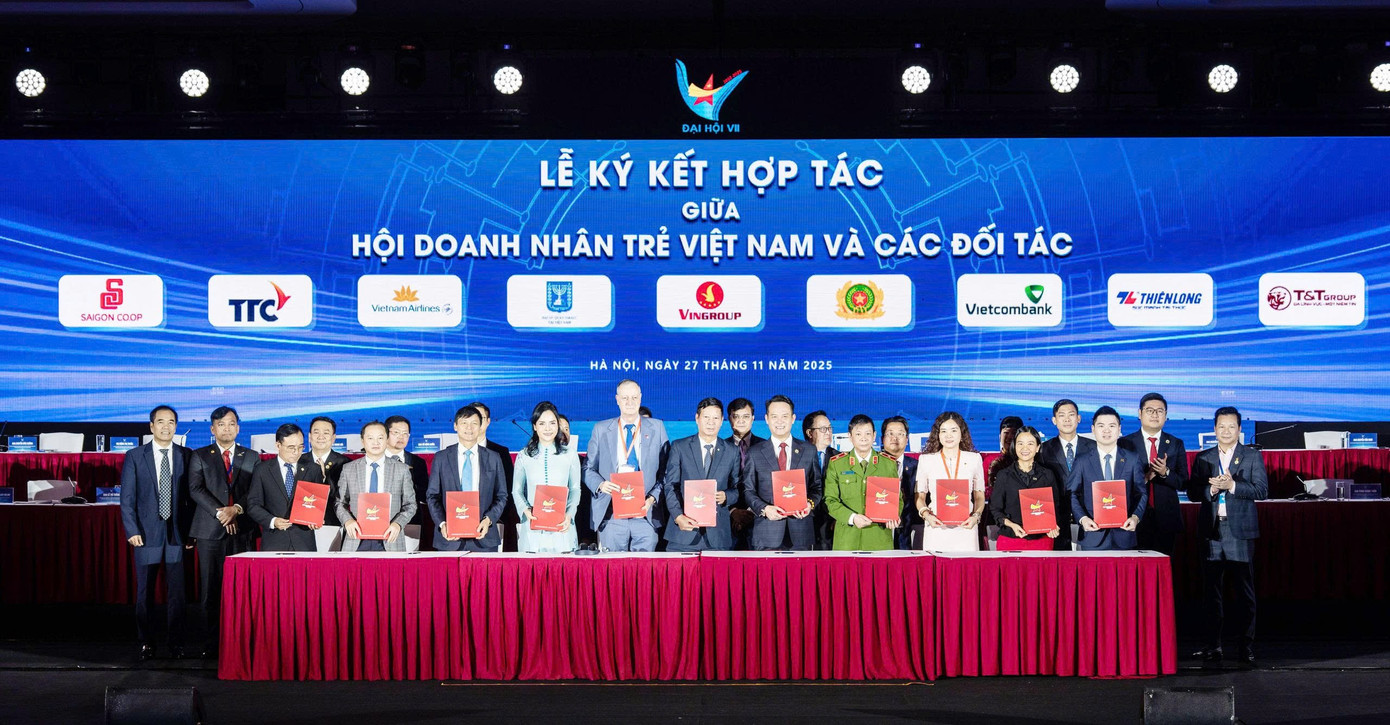
Vietnam Young Entrepreneurs Association signs agreements with partners.
Along with that, young entrepreneurs are committed to long-term investment in production, technology, and human resources, creating high-quality jobs, improving labor productivity and workers' incomes – crucial factors in achieving the target of a GDP per capita of US$8,500 by 2030.
Furthermore, young entrepreneurs aspire to contribute to building Vietnamese brands with international competitiveness, strengthening an independent and self-reliant economy, and working alongside the State to realize Vietnam's aspiration for rapid, sustainable, and happy development.
"When institutions are sufficiently transparent, policies are stable, and trust is placed in the right place, the Vietnamese business community will not only enrich their own businesses but also directly build the foundation for an independent, self-reliant, and prosperous Vietnam. This is both an expectation sent to the 14th National Congress and a commitment to action from young Vietnamese entrepreneurs in their journey to accompany the country into a new era of development," said Dang Hong Anh, Chairman of the Young Entrepreneurs Association.
According to the Thanh Giong Newspaper