To attract investment, develop a green hydrogen market, and realize Vietnam's energy transition goals, experts believe that bottlenecks need to be removed soon.
Climate change is one of the biggest challenges facing human development, with Vietnam among the countries most severely affected. Along with the need to ensure energy security, reduce greenhouse gas emissions, and develop a green economy, finding clean and sustainable energy sources has become an urgent task.
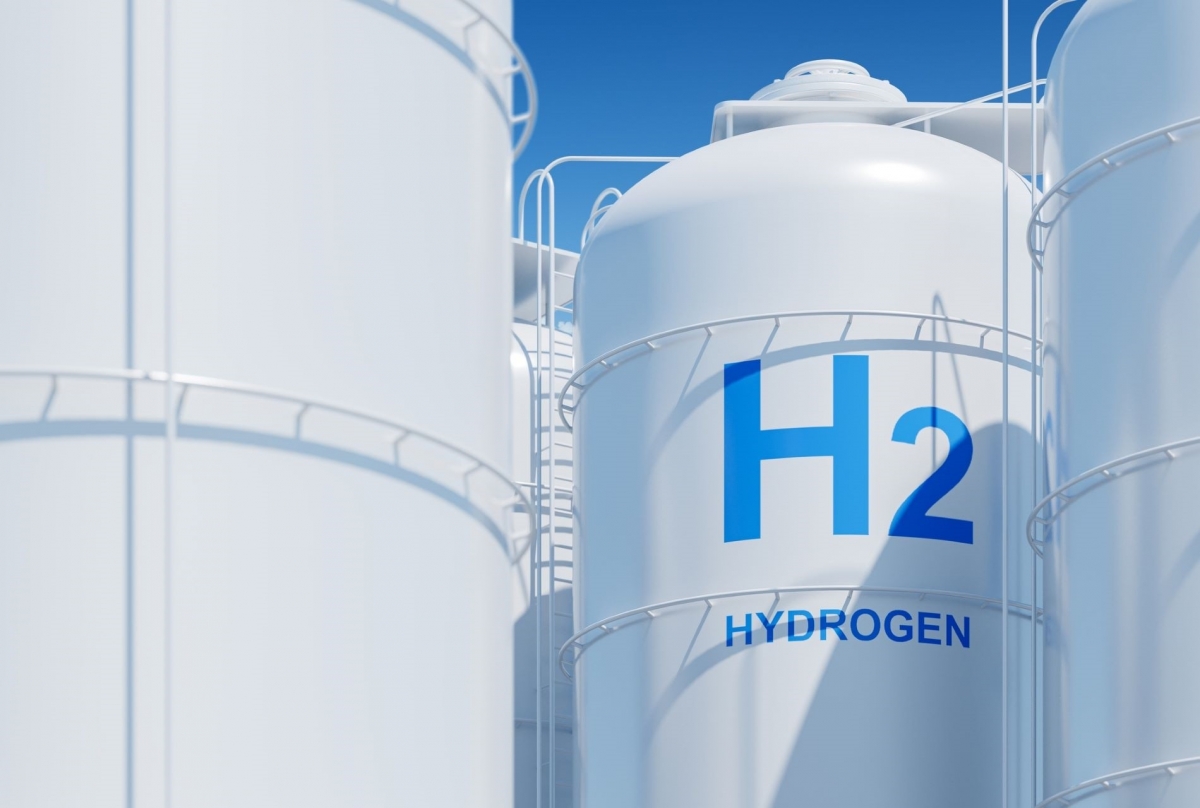
Accordingly, Decision 165/QD-TTg dated February 7, 2024, of the Prime Minister on the Strategy for Hydrogen Energy Development to 2030, with a vision to 2050, sets the goal of building a synchronized hydrogen ecosystem from production, storage, transportation, distribution to use, gradually making Vietnam a competitive country in the regional and global hydrogen value chain.
In reality, hydrogen, especially green hydrogen, is considered one of the pillars of the future energy system, playing a crucial role in the decarbonization process for industries, transportation, and electricity production.
Developing the hydrogen value chain not only contributes to ensuring energy security but also opens opportunities to attract investment, promote technological innovation, enhance the competitiveness of the economy, and fulfill Vietnam's commitment to achieving net-zero emissions by 2050.
Therefore, to attract investment, form a green hydrogen market, and realize Vietnam's energy transition goals, experts believe that bottlenecks need to be addressed soon.
Speaking at the recent Hydrogen Energy Forum and the Future of Zero-Emission Industries, Associate Professor Pham Hoang Luong, Vice President of the Vietnam Clean Energy Association (VCEA) and senior lecturer at Hanoi University of Science and Technology, stated that Vietnam possesses many advantages for developing green hydrogen thanks to its abundant renewable energy sources. The Central and South Central regions have great potential for large-scale solar power; the Central coastal region and the Mekong Delta have average wind speeds of 8-10 m/s, suitable for wind power development. In particular, according to the World Bank's assessment, Vietnam's offshore wind power potential could reach 600 GW.
“However, the domestic hydrogen industry is still in its early stages. Approximately 500,000 tons of hydrogen are produced annually, mostly gray or black hydrogen, primarily from coal at the Bac Giang and Ninh Binh fertilizer plants or from natural gas at the Phu My and Ca Mau fertilizer plants.
To date, Vietnam still lacks a commercial-scale green hydrogen project. The most notable pilot project is Edeflow in Long An, with a capacity of 1 MW, using alkaline electrolysis technology based on cooperation between Vietnam, Germany, and France,” Associate Professor Pham Hoang Luong shared.
According to Associate Professor Pham Hoang Luong, in its Hydrogen Energy Development Strategy, Vietnam aims to produce 100,000-500,000 tons of low-emission hydrogen annually by 2030 and increase this to 10-20 million tons per year by 2050, gradually forming a green hydrogen industry to serve the goal of net zero emissions. To realize this goal, three major bottlenecks need to be addressed promptly.
“First and foremost is the transmission and connectivity infrastructure. Developing green hydrogen requires a synchronized green power grid system along with large-scale energy storage infrastructure capable of meeting production and distribution needs.
Secondly, technological capacity is crucial. Vietnam needs to gradually master electrolysis technology and hydrogen production equipment, and promote the training of high-quality human resources to reduce dependence on imported technology.
Thirdly, the legal framework needs to be perfected, including a system of standards, technical regulations, and appropriate pricing mechanisms for low-emission hydrogen. This is an important condition to build investor confidence and promote market development,” proposed Associate Professor Pham Hoang Luong.
Regarding this issue, in order to contribute to promoting energy transition, enhancing the competitiveness of the economy, and realizing Vietnam's green and sustainable development goals, some opinions also suggest that perfecting the legal framework requires strong mechanisms to attract domestic and foreign investment.
It is known that, previously, to create a foundation for the development of the green hydrogen market, the Government assigned the Ministry of Industry and Trade to continue perfecting the amended Chemical Law, the Electricity Law, and researching investment incentives and electricity pricing mechanisms for hydrogen production; the Ministry of Construction to develop a green energy transition program and supplement regulations on hydrogen use in the transportation sector;
the Ministry of Finance to research green tax and credit policies and preferential loan terms; and the Ministry of Agriculture and Environment to consider applying hydrogen as an alternative to fossil fuels in agricultural production.
According to the Business Forum