Amidst ever-growing energy demands, the development of green hydrogen, green ammonia, and new energy sources is expected to create further opportunities to ensure energy security and foster green growth.
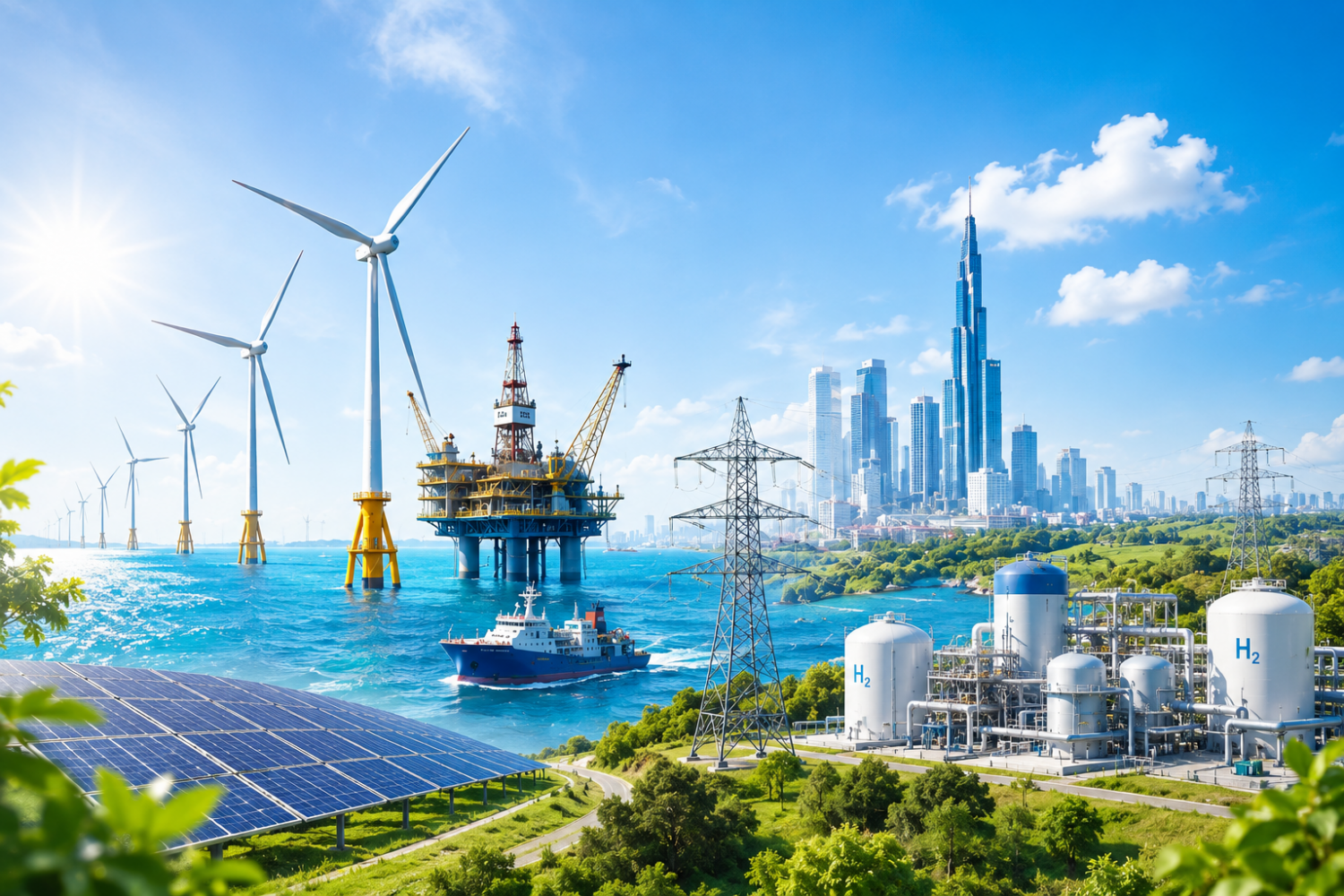
Resolution 70-NQ/TW on ensuring national energy security through 2030, with a vision to 2045, sets forth the guiding principle of "synchronous, rational, and diversified energy development; prioritizing the exploitation and efficient, comprehensive utilization of renewable, new, and clean energy sources..."
Given the high energy demand required to meet the economy's double-digit growth targets, developing new energy sources (green energy) - such as green hydrogen or green ammonia - is a core solution for drastically reducing greenhouse gas emissions and combating climate change.
International forecasts indicate that global hydrogen demand could increase nearly fivefold by 2050, with the transport sector accounting for approximately 40% of the total demand.
Under a "net-zero" emissions scenario, over 30% of the fuel used for heavy-duty trucks and more than 60% of the fuel for the maritime sector would come from hydrogen or derivative fuels such as green ammonia and green methanol.
According to Decision No. 165/QĐ-TTg dated February 7, 2024, in which the Prime Minister approved Vietnam's Hydrogen Energy Development Strategy through 2030 with a vision to 2050, the country aims to achieve a hydrogen production capacity - derived from renewable energy and other processes involving carbon capture - of approximately 100,000–500,000 tons per year by 2030, rising to 10–20 million tons by 2050. This green energy source plays a vital role in achieving the nation's net-zero emissions goal.
Since the issuance of the Hydrogen Energy Development Strategy, numerous investors have researched and proposed green hydrogen production projects; however, the. majority remain in the pre-investment preparation stage. PetroVietnam Gas Corporation (PV GAS) - a subsidiary of the Vietnam Oil and Gas Group (Petrovietnam) - is focusing on developing technologies for the production of green hydrogen and green ammonia.
Another Petrovietnam subsidiary, the Vietnam Petroleum Institute (VPI), is conducting research into CO2 mineralization technology to help reduce emissions.
Other Petrovietnam subsidiaries - such as Binh Son Refining and Petrochemical Joint Stock Company (BSR), PetroVietnam Fertilizer and Chemicals Corporation (PVFCCo), and PetroVietnam Ca Mau Fertilizer Joint Stock Company (PVCFC) - already possess experience in producing "grey" hydrogen, creating a foundation for the transition to green hydrogen.
According to the Ministry of Industry and Trade, hydrogen (primarily grey hydrogen) is currently consumed by nitrogen fertilizer plants (approximately 316,000 tons/year), the Dung Quat Oil Refinery (39,000 tons/year), and the Nghi Son Refinery and Petrochemical Complex (139,000 tons/year).
A small remaining portion is used in the production of steel, float glass, electronics, and food products (accounting for about 0.5% of total domestic demand). Meanwhile, green hydrogen remains in the experimental stage and is not yet utilized in the power, transportation, or residential sectors.
Assessing the prospects for green hydrogen development in Vietnam, Dr. Mai Duy Tan - Chairman of the Board and CEO of THDV Green Development Investment Consultancy JSC - stated that green hydrogen is not merely a new energy source but also has the potential to become a central link connecting various economic sectors.
Accordingly, abundant biomass sources - such as agricultural by-products, livestock waste, and organic waste - could serve as input materials for the production chain. Through processing, this biomass can be converted into biogas, biomethane, biomass-generated electricity, and biogenic CO2. Biomethane can be used for power generation or liquefied into Bio-LNG, while biogenic CO2 (generated from natural decomposition or the combustion of biomass such as plant, animal, and organic waste) can be combined with green hydrogen to produce green methanol and sustainable aviation fuel (SAF).
Consequently, biogenic CO2 is captured and reused in fuel production, creating a circular carbon cycle that simultaneously reduces greenhouse gas emissions and enhances the value of biomass resources.
To date, many countries worldwide have implemented effective policies to develop green hydrogen.
In Japan, the government has introduced a "price-gap support" mechanism for businesses developing supply chains for clean hydrogen and its derivatives, such as ammonia, e-methanol, and e-fuels.
Meanwhile, Germany and the EU have implemented the Important Projects of Common European Interest (IPCEI) mechanism, allowing member states to jointly provide financial support for large-scale, strategic hydrogen projects.
The European Hydrogen Bank (EHB) also supports projects aimed at scaling up renewable hydrogen production and developing the hydrogen market through fixed subsidies calculated in EUR per kilogram of certified renewable hydrogen.
In parallel, Germany has launched the H2Global mechanism - a double-sided auction model designed to connect global low-emission hydrogen supplies with demand within Germany and the EU.
Dr. Nguyen Huu Luong, a senior expert at VPI, noted that Vietnam has already adopted significant policies, such as Decision No. 876/QD-TTg (dated July 22, 2022) on the green energy transition in transportation and Decision No. 165/QD-TTg approving the Hydrogen Energy Development Strategy.
However, for these policy to be effective - particularly regarding hydrogen - the key solutions involve the early establishment of technical standards and safety regulations for vehicles and hydrogen refueling stations, investment support mechanisms, hydrogen pricing frameworks, and pilot projects to assess economic viability before scaling up.
Meanwhile, Associate Professor Dr. Pham Hoang Luong, Vice President of the Vietnam Clean Energy Association (VCEA), noted that developing green hydrogen requires a synchronized green power grid and large-scale energy storage infrastructure capable of meeting production and distribution demands.
Furthermore, Vietnam needs to gradually master electrolysis technology and hydrogen production equipment, while intensifying the training of a high-quality workforce to reduce reliance on imported technologies.
Additionally, finalizing the legal framework - including standards, technical regulations, and appropriate pricing mechanisms for low-emission hydrogen - is crucial for building investor confidence and fostering market growth.
According to Vietnam+