Far more than just a magnet for foreign capital, the DPPA mechanism also serves as a lifeline for domestic manufacturing enterprises.
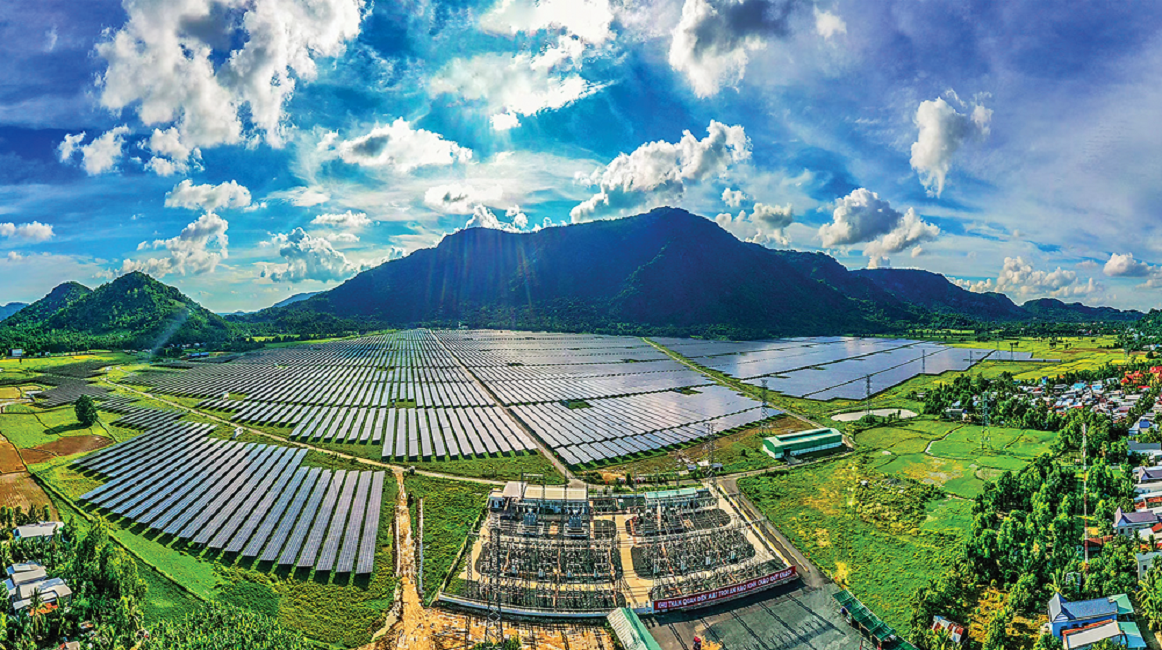
As green standards reshape the rules of global trade, the introduction of the Direct Power Purchase Agreement (DPPA) mechanism represents not only a policy turning point but also a practical solution to the business community's clean energy needs. It serves as a strategic lever, helping Vietnam strengthen its appeal for Foreign Direct Investment (FDI) and enhance its national competitiveness.
For years, Vietnam’s FDI inflows and export landscape have faced pressure from ESG (Environmental, Social, and Governance) standards and Net Zero commitments. Multinational corporations establishing production hubs often make the use of renewable energy a prerequisite; failure to meet this requirement carries a real risk of supply chains shifting to other countries.
Against this backdrop, the Government’s Decree No. 80/2024/NĐ-CP on the DPPA mechanism has effectively resolved this bottleneck. The mechanism allows large-scale consumers to sign direct power purchase contracts with renewable energy plants—either via dedicated lines or the national grid—thereby dismantling monopolies and fostering a transparent, flexible energy market.
Commenting on the policy's timing, Dr. Nguyen Quoc Viet, Deputy Director of the Vietnam Institute for Economic and Policy Research (VEPR), describes the DPPA mechanism as a major breakthrough in institutional thinking. The decree not only aligns perfectly with the timing of international investors' needs but also sends a strong signal regarding the Government's commitment to sustainable development. This serves as a significant advantage for Vietnam in the global race to attract green FDI. Beyond acting as a magnet for foreign capital, the Direct Power Purchase Agreement (DPPA) mechanism serves as a lifeline for domestic manufacturers. As the European Union’s Carbon Border Adjustment Mechanism (CBAM) and various eco-regulations tighten, the "green energy content" of products has become a critical factor for survival. No matter how low the production cost, goods manufactured using high-emission fossil-fuel-based electricity face immediate carbon taxation and the total loss of their competitive edge.
Proactively purchasing electricity directly from renewable energy projects enables enterprises to acquire Renewable Energy Certificates (RECs)—a valid "passport" allowing Vietnamese goods to confidently clear the technical barriers imposed by markets such as the EU, the US, and Japan.
Speaking from the perspective of an energy-intensive sector, Mr. Truong Van Cam, Vice Chairman and Secretary General of the Vietnam Textile and Apparel Association (VITAS), frankly notes that importing partners now demand absolute transparency regarding energy sources. Adopting DPPA allows Vietnamese textile, dyeing, and garment factories to secure a proactive supply of green energy, optimize long-term costs, and retain major orders. Purchasing green energy is no longer merely a trend; it is a matter of survival for protecting market share.
While representing a historic step forward, the practical implementation of DPPA still faces certain technical hurdles. The greatest challenge currently lies in the load-bearing capacity of the national power transmission system and the mechanism for pricing distribution services. As numerous DPPA transactions are activated, the pressure on system dispatching will intensify, necessitating significant upgrades to smart grid infrastructure. Analyzing this bottleneck, Assoc. Prof. Dr. Bui Xuan Hoi, an energy economics expert, emphasizes that while the legal framework has been established, transmission infrastructure and power system dispatch capabilities must stay a step ahead for the DPPA mechanism to truly take off. Financial mechanisms are needed to support grid upgrades and prevent situations where green energy is generated but cannot be transmitted. At the same time, system service tariffs must be designed openly and transparently, enabling businesses to formulate accurate financial plans.
It is evident that the DPPA mechanism is not merely a regulation within the power sector; rather, it represents the intersection of innovative institutional thinking and the economy's aspiration for a green transition.
According to TTXVN