While the green transition trend is gaining momentum, the fact that electric vehicles are still being "denied parking" in some areas indicates policy gaps that need to be addressed.
Towards the end of 2025, the Management Board of the HH Linh Dam apartment complex (Hoang Liet Ward, Hanoi) unexpectedly issued a notice temporarily suspending the registration of new electric motorbikes and electric bicycles, and also planning to completely stop parking all types of electric vehicles in the basement.
The notice stated: "From February 1, 2026, the basement will not accept any electric motorbikes or electric bicycles for parking, including those already parked there." According to the management unit, the rapid increase in the number of electric vehicles has overloaded the basement, posing a potential safety risk, especially the risk of fire and explosion from batteries if short circuits occur, collisions happen, or charging is done improperly. When the density of vehicles is too high, a fire could spread quickly, creating a lot of toxic smoke, making evacuation difficult and exceeding the safe load capacity of the building's design.
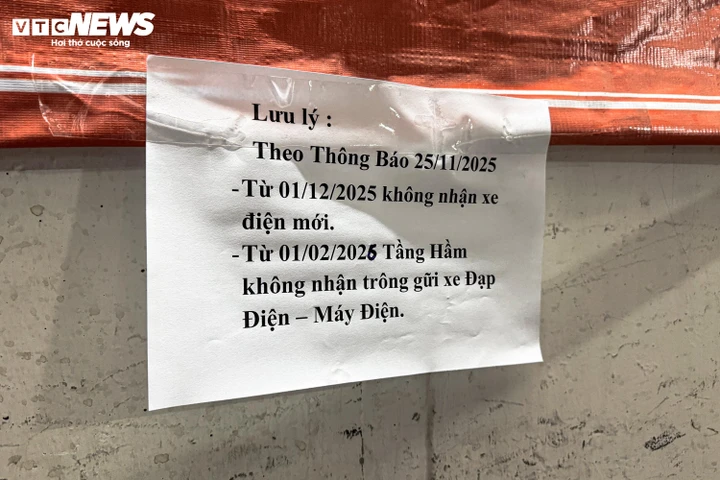 Notices announcing the temporary suspension of electric vehicle parking services have been posted in the basements of the HH Linh Đàm apartment building.
However, this decision immediately met with much opposition and created a wave of debate among the residents of HH Linh Đàm – those directly affected by the cessation of electric vehicle parking in the basement.
Some residents said that, according to the apartment purchase contracts, the right to manage and operate the basement area belongs to the developer, while residents are only allocated parking spaces for motorbikes. At the time of signing, electric vehicles were not yet common, so the contracts did not specify this, and parking mainly applied to gasoline-powered vehicles.
“Our biggest concern is the lack of safe charging facilities for electric vehicles; having to leave them outside for unofficial charging is very inconvenient and potentially risky. Residents hope the management board will soon arrange a safe area for electric vehicles to park and charge so they can use their electric vehicles with peace of mind,” said Ms. Dung, a resident.
"My family currently uses three electric scooters, and with that many, I really don't know where we're going to park them now that the building has announced this," Minh Anh said angrily.
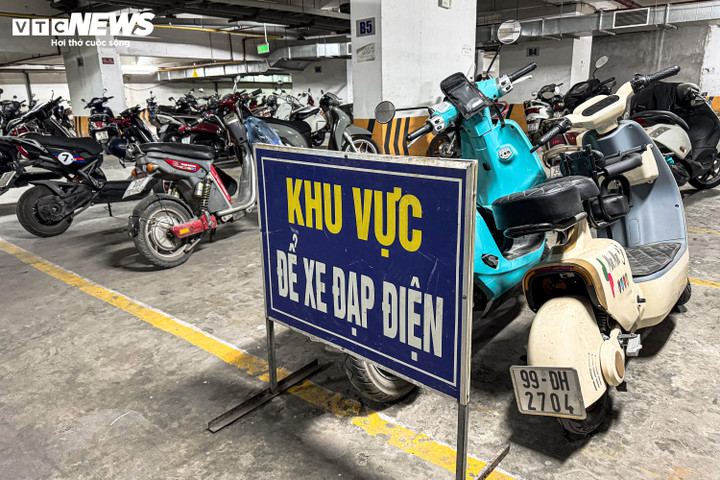 Electric vehicle parking area in the basement of HH Linh Đàm apartment building.
The People's Committee of Hoang Liet Ward (Hanoi) has requested that Private Enterprise No. 1 of Dien Bien Province and the Linh Dam Housing Service Branch not refuse to provide parking services for electric vehicles, in accordance with the 2023 Housing Law.
Hoang Liet Ward also requested the investor and operating unit to increase patrol forces to promptly detect and handle any situations or incidents arising during the parking process in the basement of the HH apartment complex.
Not only at the HH Linh Dam apartment complex, but 2025 also saw several apartment buildings in other localities and rental housing areas unexpectedly announcing the refusal to accept electric vehicles for parking or to allow charging at their rental properties.
As VTC News Online previously reported, many students and freelance workers are also having difficulty finding affordable rental housing because they use electric vehicles. The reason is that landlords are afraid of fire hazards and therefore restrict rentals to those who use electric vehicles, or require them to constantly monitor the vehicles while charging.
This story highlights the shortcomings of infrastructure and management regulations failing to keep pace with the rapid changes in transportation, especially electric vehicles. In this context, building management needs to play a more proactive role in reviewing and adjusting operational plans, space allocation, and safety measures, instead of leaving residents confused by sudden decisions.
In Ho Chi Minh City, the management of Jamona City apartment complex (Phu Thuan ward) chose a different approach. Construction began in Q1 2015 and was completed in 2017, a time when electric vehicles were not yet widespread.
Therefore, with the increasing demand for charging, the management flexibly repurposed the bicycle parking area to meet the need.
This area is located approximately 15 meters away from the gasoline-powered parking area, has a 24/7 surveillance camera system, and is fully equipped with fire safety systems.
The charging sockets are directly connected to the main circuit breaker, so in the event of a fire or explosion, simply switching off the main circuit breaker will cut off the entire power supply, allowing for faster and safer response. In addition, security personnel are always on duty during electric vehicle charging, ready to detect and respond promptly if any incidents occur.
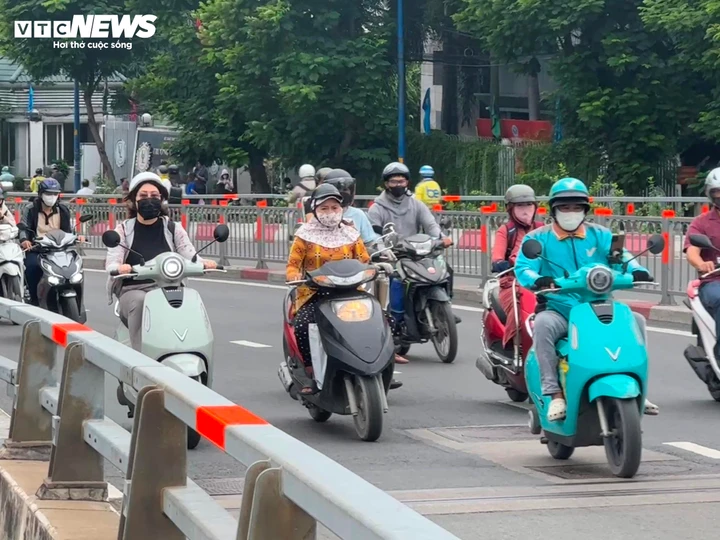 In Ho Chi Minh City, many residents and ride-hailing drivers have chosen electric vehicles as their means of transportation.
According to observations, most apartment buildings in Hanoi and Ho Chi Minh City still allow residents to park electric motorbikes and electric bicycles. However, many residents living in older apartment buildings and collective housing complexes are hesitant to switch to green transportation due to concerns about parking and charging issues.
Clearly, given the rapid increase in green energy vehicles, there remains a policy gap on this issue; highlighting the need for the early issuance of specific guidelines and safety standards for older apartment buildings when installing additional electric vehicle charging stations.
At the same time, clear regulations are needed to handle cases of illegal charging and parking bans for electric vehicles, in order to ensure the legitimate rights and interests of residents.
During a recent seminar on green vehicle transition, when discussing the difficulties in providing charging infrastructure for electric vehicles in apartment complexes, Mr. Bui Phi Long, Permanent Vice President of the Hanoi Transport Association, proposed: "In the short term, a temporary solution should be to focus on areas where charging stations can be located. Within a radius of a few hundred meters, there should be a manager, surveillance cameras, and an automatic power cut-off system. In residential areas, efforts should be made to find playgrounds and open spaces where charging can be implemented.
In the long term, the city must incorporate the design of charging infrastructure into the design standards for both new and renovated apartment buildings, making it mandatory. This is similar to our current regulations on fire safety and emergency exits; only then can residents feel secure and not worry about the safety of charging locations."
On February 11, 2025, the Hanoi People's Committee issued Official Document No. 427/UBND-SXD, providing urgent technical guidelines to enhance fire safety in multi-story buildings, mini-apartments, detached houses combined with businesses, and rental housing. The regulations regarding electric vehicle charging are particularly clear and strict.
Specifically, electric vehicle charging areas (if any) must be located separately, ensuring a safe distance from flammable materials and vehicles. Charging overnight is strictly prohibited unless supervised or using a self-shutoff charging device. The charging process must be continuously monitored, ensuring the battery has cooled down for at least 20 minutes after use before charging, and charging should not exceed 8 hours continuously.
Furthermore, parking areas must be properly positioned, not obstructing escape routes, not near electrical cabinets or pumps, and not obstructing fire fighting equipment. Charging power sources need separate circuit breakers for automatic switching, and when there are many electric vehicles, separate power lines must be designed for each charging group to avoid overloading and short circuits.
According to VTC News