In every real estate cycle, infrastructure is always considered the factor with the strongest potential to influence prices. The history of urban development in Ho Chi Minh City shows that many areas have significantly changed in value when important transportation projects were developed, from Vo Van Kiet Boulevard and the Thu Thiem Tunnel to bridges connecting to the city center.
When infrastructure is completed and a residential community is formed, real estate typically enters a phase of establishing a new price level. In the southwestern part of the city, the D-Aqua apartment project is entering this phase as construction is underway and being handed over, while the surrounding area continues to receive investment in important connecting infrastructure projects.
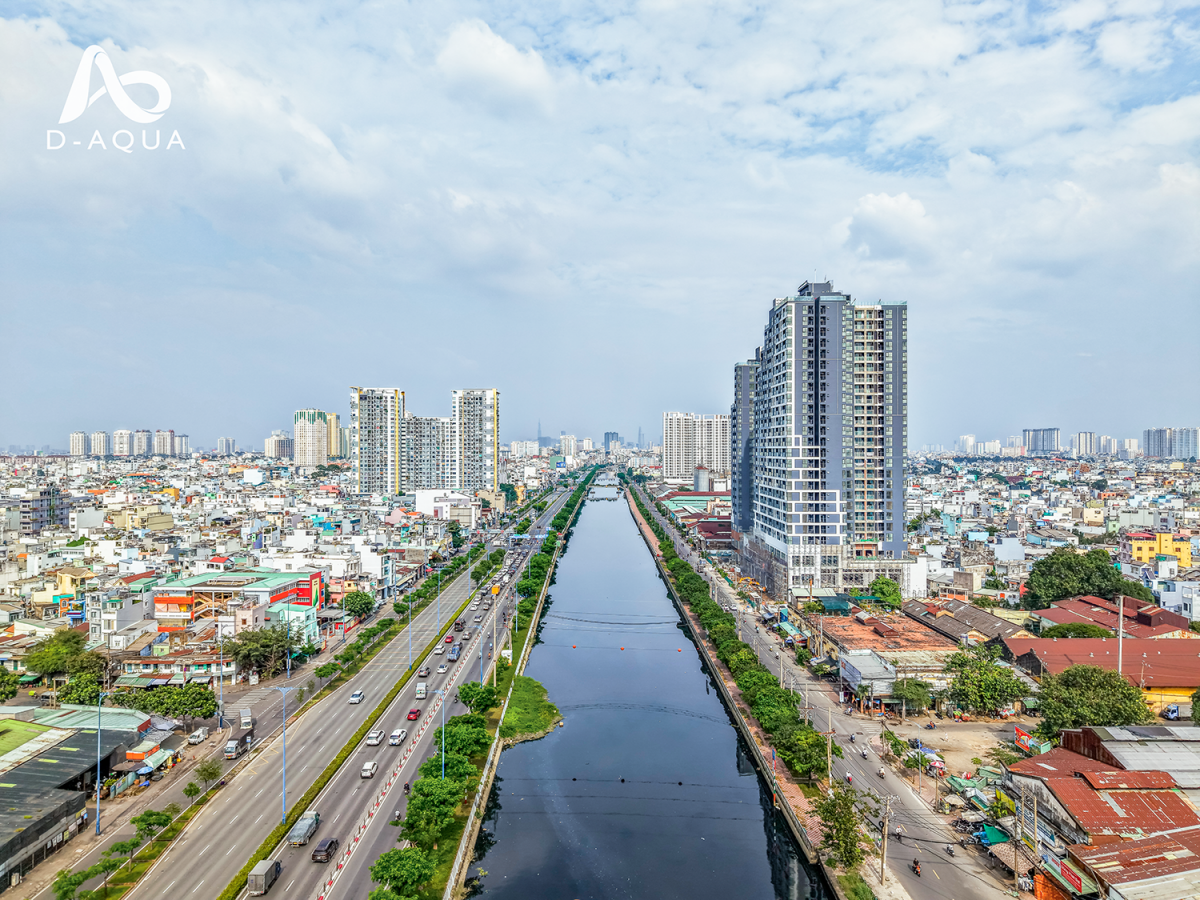 D-Aqua is currently being delivered to customers.
Infrastructure Development Adds a New Connecting Axis to the Southwest Area
One of the notable recent infrastructure developments is the plan to implement the Binh Tien bridge and road project with a total investment of over 6,200 billion VND.
According to the plan, the road will be approximately 3.6 km long, starting from Pham Van Chi Street (formerly District 6), passing through District 8, crossing the Tau Hu - Ben Nghe canal, and connecting to the Nguyen Van Linh axis in the South of Ho Chi Minh City. The project is designed with 4-6 lanes and a cross-section of 30-40 m. Upon completion, this road will create another important transportation axis connecting the South with the city center.
For many years, travel from the southern districts to the city center of Ho Chi Minh City has mainly relied on routes such as Vo Van Kiet, Nguyen Van Linh, or Nguyen Huu Tho. The appearance of the Binh Tien bridge and road is expected to contribute to redistributing traffic flow and increasing connectivity in the southwestern region.
In urban development, each new transportation route often acts as a "lever" to promote urban renewal, leading to the development of commercial, service, and housing activities in the area.
D-Aqua's Position in the Transformation Phase
In the overall market picture, completed projects located in areas with developing infrastructure are often considered to have the potential to participate early in a new growth cycle.
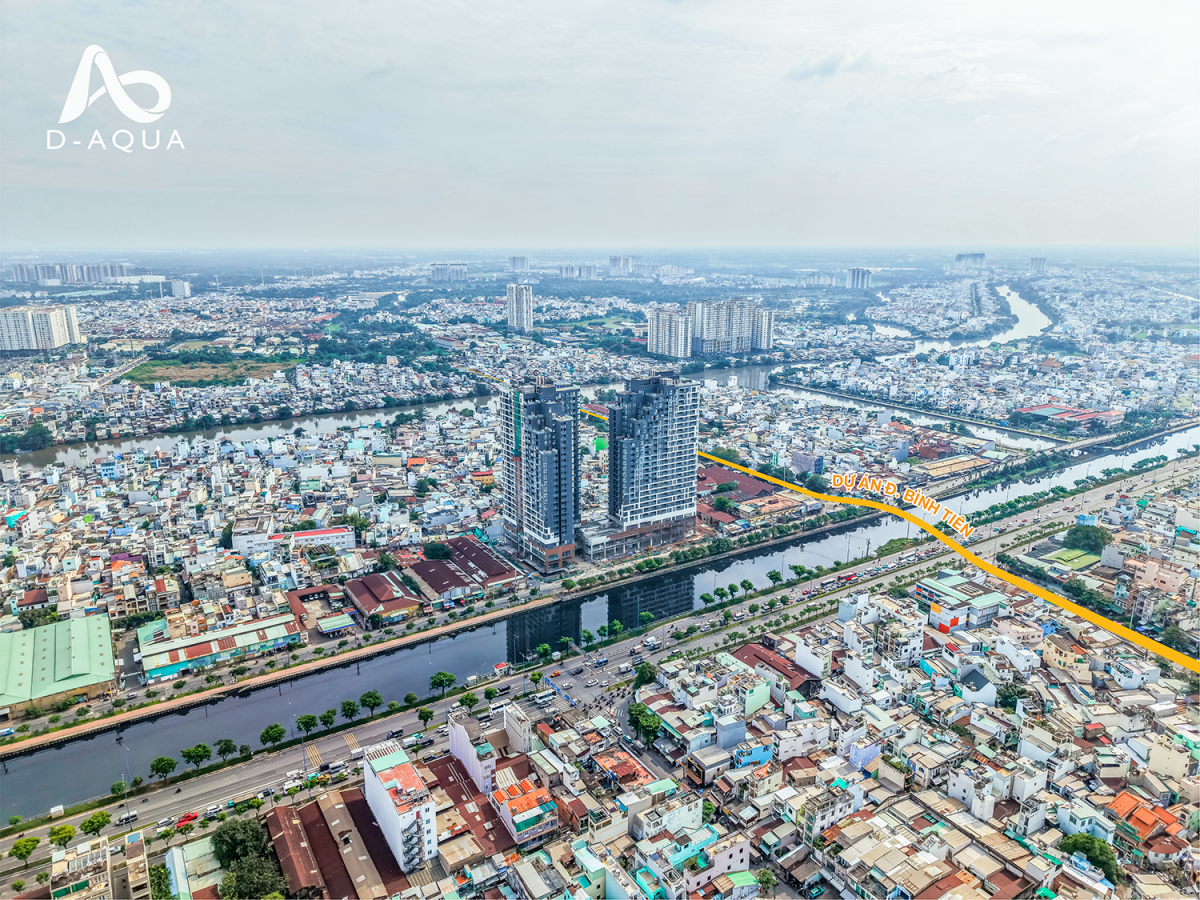 D-Aqua is located on the Ben Binh Dong waterfront, along the Tau Hu canal, in an area that has been undergoing urban renovation and infrastructure development for many years.
The ongoing handover of the project helps to form a real residential community, while also creating a foundation for service and commercial activities in the area.
As transportation projects such as the Binh Tien bridge and road are accelerated, the area's connectivity is expected to continue to improve, increasing accessibility between the Southwest and central districts.
The combination of the handover timing and infrastructure development is creating conditions for D-Aqua to become one of the existing projects capable of anticipating the new growth cycle of the market in the 2026-2028 period.
Advantages of completed properties
During a market recovery cycle, completed properties tend to record transactions and increase in value sooner than projects still under development. This stems from three main advantages. Firstly, it reduces risk for buyers. Customers can directly observe the construction quality, living space, and amenities instead of relying solely on images or blueprints. Secondly, it increases liquidity. A completed apartment can be resold or rented out immediately, giving investors more flexibility in utilizing the property. Thirdly, it allows for the demonstration of actual rental performance. Rental income, occupancy rates, and surrounding commercial activity are all data that help the market determine property values more clearly.
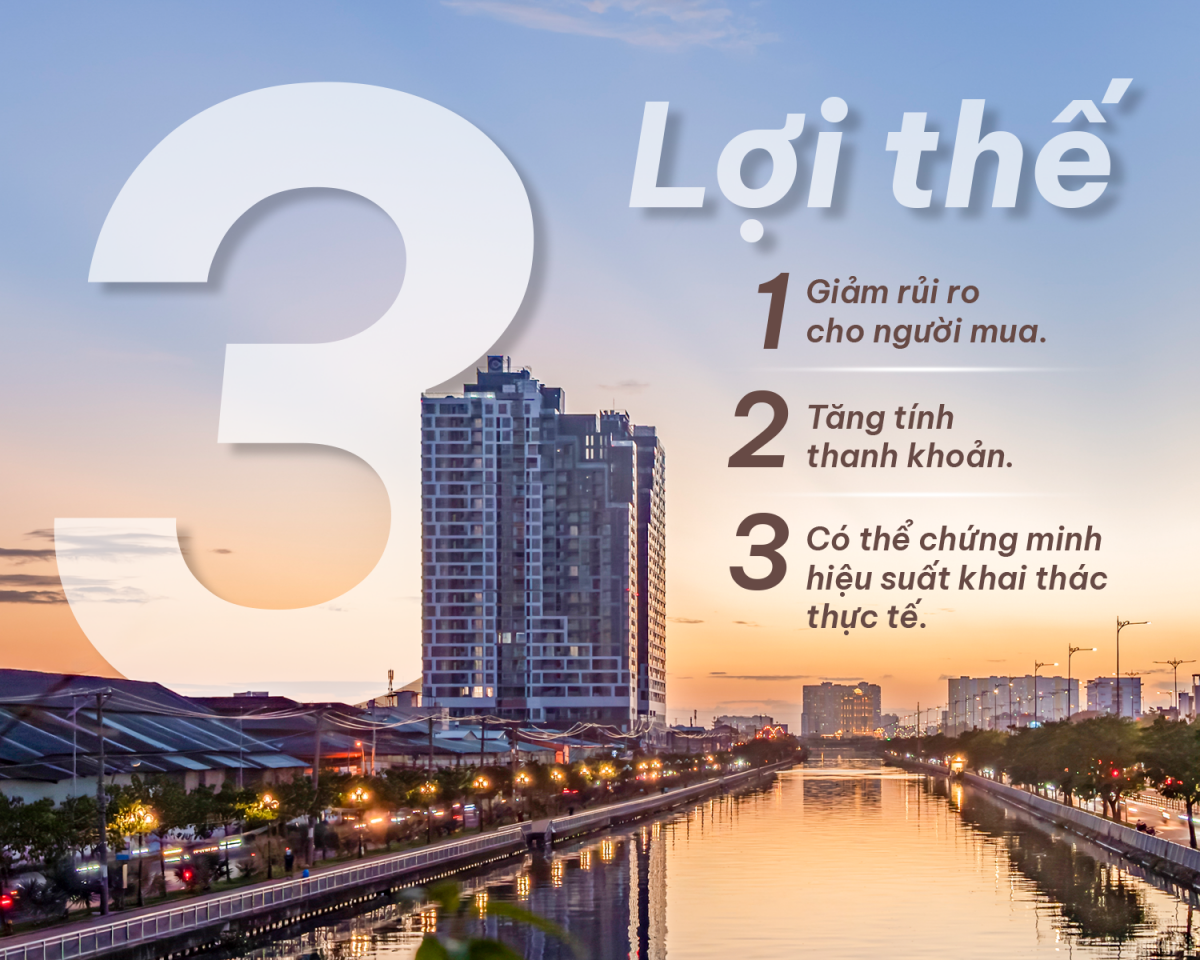 In the context of a market entering a recovery phase, assets that have already been delivered are generally considered to be well-suited to adapting to the new cycle.
Three Key Factors Determining Price Increase Cycles
According to data from previous market cycles, real estate values typically surge when three core factors converge: connectivity infrastructure, community formation, and market liquidity. Specifically: Connectivity infrastructure: Transportation infrastructure acts as the urban circulatory system. When new roads are formed, travel time between areas is shortened, thereby expanding the living and working spaces for residents; Population growth: An urban area only truly becomes operational when residents begin to move in. This is the stage where commercial amenities, services, and communities gradually develop; Improved market liquidity: As both demand for housing and investment increases, the secondary market begins to see buying, selling, and renting transactions, helping to gradually re-establish price levels. When these factors occur simultaneously with improvements in regional infrastructure, real estate typically enters a phase of re-establishing new price levels.
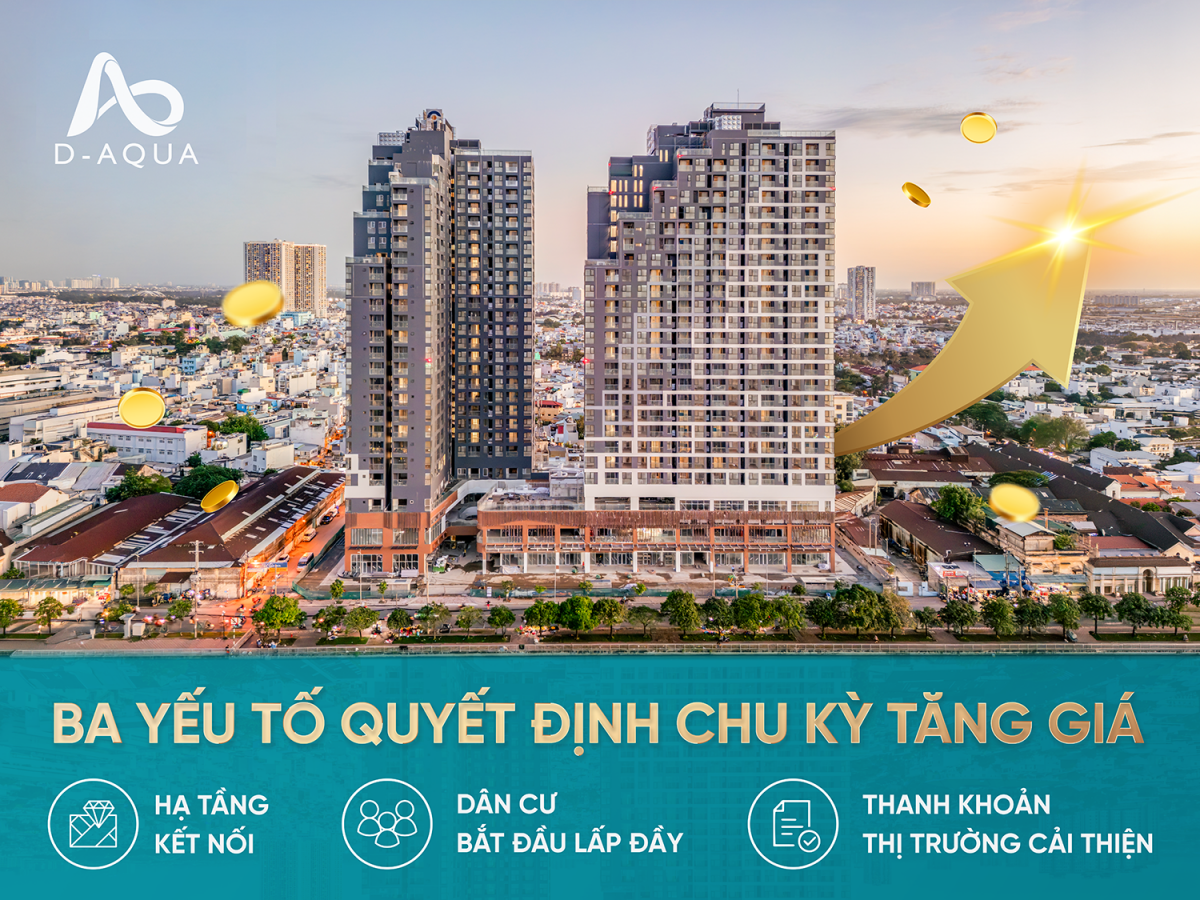
For the area along the Tau Hu - Ben Nghe canal, urban renovation over the past years has gradually changed the appearance of the area. The development of new transportation routes continues to be seen as an important driving force promoting the transformation of the southwestern area of Ho Chi Minh City in the coming years.
According to the Business Integration Newspaper