New regulations on customs, import and export taxes, rules of origin, and updated financial solutions help FDI enterprises proactively review processes, improve compliance efficiency, and enhance operational management.
Many Solutions to Support Businesses
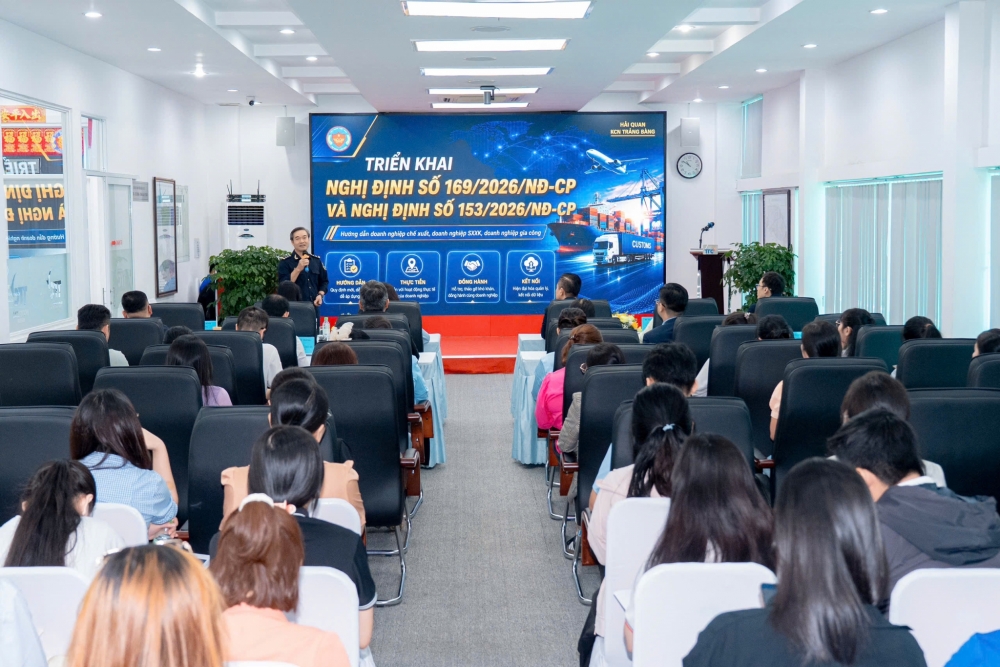
On July 24th, the FDI 2026 Workshop was held in Tay Ninh, organized by the Vietnam Foreign Trade Commercial Bank (Vietcombank) - Tan Saigon Branch in collaboration with Thanh Thanh Cong Industrial Park Joint Stock Company (TTC IZ).
The FDI 2026 Workshop brought together many experts in the fields of economics, finance, and customs, focusing on three main topics: the macroeconomic context and prospects for attracting FDI; financial solutions for businesses; and new updates on import and export tax policies, customs, and rules of origin.
Sharing insights on the macroeconomic situation, a representative from RSM Vietnam Audit and Consulting Company Limited stated that the Vietnamese economy is maintaining positive growth momentum, creating a favorable foundation for FDI investment activities. In the first six months of 2026, the country's GDP increased by 8.18%, registered FDI reached US$34.65 billion, a 61% increase compared to the same period, while export turnover reached US$266.5 billion, a 21% increase.
For Tay Ninh, after the administrative boundary consolidation, the locality continues to affirm its advantage as a gateway connecting the Southeast region with Cambodia and the Mekong Delta. In the first six months of the year, the province's GRDP increased by 10.12%, attracting over US$2.267 billion in FDI, placing it among the leading localities nationwide in attracting foreign investment.
According to RSM Vietnam, along with the growth potential, FDI enterprises also need to proactively update themselves on new regulations regarding taxes, investment incentives, related-party transactions, and global minimum tax rates to ensure compliance and mitigate risks during operations.
In the financial sector, Vietcombank representatives introduced solutions for supply chain financing, trade finance, international payments, cash flow management, and a digital ecosystem of products and services to support FDI enterprises in optimizing capital, improving management efficiency, and increasing connectivity with partners in the supply chain.
Mr. Huynh Song Hao, Director of Vietcombank Tan Saigon, stated that in the context of a constantly changing business environment and international trade policies, timely updating of legal regulations, strengthening management capacity, and building a suitable financial ecosystem are crucial factors for FDI enterprises.
According to Mr. Hao, Vietcombank aims to accompany businesses not only as a provider of financial services but also as a partner connecting resources, sharing information, and supporting businesses in improving operational efficiency and achieving sustainable development.
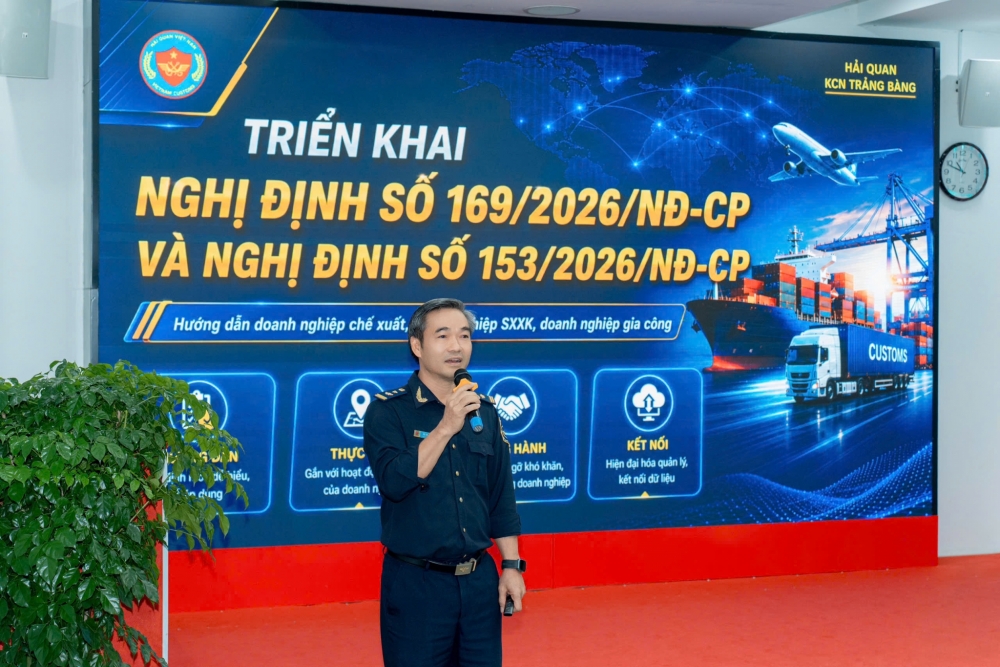 Mr. Bui The Minh, Deputy Team Leader of the Customs Department of Trang Bang Industrial Zone, shared this at the workshop.
Businesses need to proactively review to mitigate risks
At the workshop, Mr. Bui The Minh, Deputy Team Leader of Trang Bang Industrial Park Customs (Customs Sub-department of Region XVII), introduced the new points of Decree No. 169/2026/ND-CP regulating administrative penalties in the customs field and Decree No. 153/2026/ND-CP amending and supplementing regulations on the scope of customs operations, both effective from July 2026.
According to Mr. Bui The Minh, the new regulations require businesses to review the declaration process, customs document management, accounting data, goods management, and clearly assign responsibilities among relevant departments to ensure compliance with regulations and minimize violations.
The representative of Trang Bang Industrial Park Customs also noted common violations such as: violations regarding deadlines for procedures and document submission; customs declaration; False declarations resulting in underpayment of taxes; violations in customs inspection and supervision and implementation of management policies for import and export goods.
For export processing enterprises, export-oriented manufacturing enterprises, and processing enterprises, it is necessary to strengthen the management of raw materials, supplies, machinery, and equipment; ensure inventory data is consistent with customs records and accounting books; and fully comply with the notification obligation when changing the location of goods storage, production facilities, or handling of scrap and waste materials as prescribed.
According to experts, in the context of international trade increasingly demanding high standards for transparency of goods origin, compliance with customs regulations and rules of origin, proactively updating policies will help businesses minimize legal risks, effectively utilize free trade agreements, and enhance competitiveness in the international market.
Through this workshop, Vietcombank Tan Saigon and TTC IZ expect to strengthen connections between banks, businesses, regulatory agencies, and industrial park infrastructure developers, contributing to supporting the FDI business community in improving management capacity, optimizing financial resources, and effectively complying with legal regulations during the integration process.
According to Customs Tax - Economic and Financial Magazine